
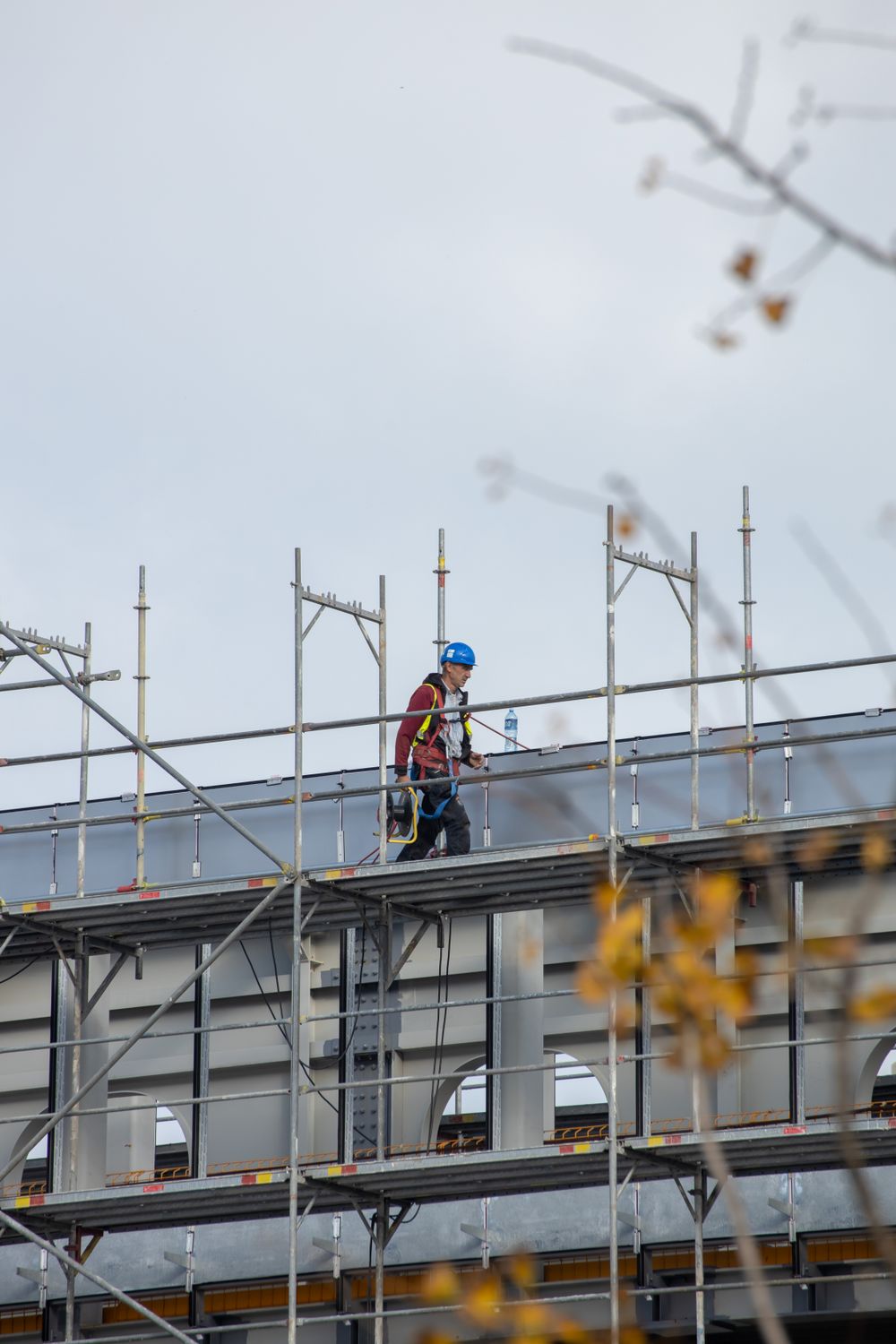
Work at Height Law in Ireland: Part 4 of the 2007 Regulations
Part 4 of the General Application Regulations is the heart of Irish work-at-height law. Here is what it covers, who has to comply, and how the avoid–prevent–minimise hierarchy should shape every decision you make before anyone leaves the ground.
Where the rules come from
Irish work-at-height duties sit within a wider safety framework. The foundation is the Safety, Health and Welfare at Work Act 2005which obliges every employer to ensure, so far as is reasonably practicable, the safety, health and welfare of employees, and to provide a safe place and system of work.
The detail that applies specifically to falls is set out in the Safety, Health and Welfare at Work (General Application) Regulations 2007, Part 4 (Work at Height). Part 4 takes the broad obligations of the Act and turns them into practical requirements for planning, equipment, inspection and competence. The Health and Safety Authority (HSA) enforces both.
Scope: what Part 4 applies to
Part 4 applies to work at any place where, if measures were not taken, a person could fall a distance liable to cause personal injury. It covers work above ground, at ground level near an opening, and below ground, such as next to an excavation. There is no minimum height threshold, so the rules apply to a stepladder task just as they apply to scaffolding.
The Regulations also extend to access and egress, the equipment used, and any work near or on a fragile surface. If your activity involves any of these, Part 4 is in play.
Duty holders: who must comply
The main duty falls on the employer, but responsibility is shared.
- Employers must plan, organise and supervise work at height, provide suitable equipment, and ensure workers are competent.
- The self-employed carry the same duties for their own work and anyone affected by it.
- Employees must use equipment correctly, follow training and procedures, and report any defect or danger they spot.
Competence runs through all of this. The Act requires employers to provide information, instruction and training, which is why documented working at heights training is such a practical way to demonstrate compliance.
Working at Heights training from €35
Self-paced, HSA-aligned, certificate the same day — €35 per person.
The avoid–prevent–minimise hierarchy
The single most important idea in Part 4 is a strict order of priority. You must work down the list, only moving to the next step when the one above is not reasonably practicable.
- Avoid — do not work at height at all if the task can be done safely from the ground. Assembling at ground level, using extending tools, or designing the work out altogether comes first.
- Prevent — where work at height is unavoidable, prevent falls using a safe place of work and collective protection, such as guardrails, a properly boarded platform or a tower with edge protection.
- Minimise — where the risk of a fall remains, minimise the distance and consequences using collective measures like safety nets, or, as a last resort, personal protection such as fall-arrest systems.
The hierarchy is not a menu to pick from. You cannot jump straight to a harness because it is easier than erecting a guardrail.
Planning and organising the work
Part 4 requires that work at height is properly planned, appropriately supervised, and carried out safely. Planning should be proportionate to the risk, but for most tasks it means a written risk assessment and a method statement that confirm the safe system of work, the equipment chosen and the sequence of activity.
Planning must also account for weather, the condition of the surface, emergencies and, importantly, rescue. If a fall-arrest system is in use, the plan has to explain how a suspended person will be recovered quickly. Our piece on preventing falls from height looks at rescue planning in more detail.
Inspection of equipment
Suitable equipment is only safe if it is in good condition, so Part 4 sets clear inspection duties:
- Work equipment for working at height must be inspected before first use and at suitable intervals.
- Equipment exposed to conditions that could cause deterioration must be re-inspected, for example after adverse weather or any event that could affect its safety.
- Scaffolding and similar structures require inspection by a competent person before use and at regular intervals, with records kept.
- Any equipment found to be defective must be taken out of service until it is repaired or replaced.
Keeping inspection records is not just good practice. It is the evidence the HSA will look for if something goes wrong.
Key takeaways
- The 2005 Act sets the general duty; Part 4 of the 2007 Regulations sets the work-at-height detail.
- Part 4 applies wherever a fall could cause injury — there is no minimum height.
- Employers, the self-employed and employees all carry duties.
- Always work down the avoid–prevent–minimise hierarchy in order.
- Work at height must be planned, supervised, and use inspected, recorded equipment.
Turning the law into practice
Knowing the Regulations is one thing; applying them on a live job is another. Our online Working at Heightscourse translates Part 4 into practical decisions your team can make on site, covering the hierarchy, planning, equipment selection and inspection. It is self-paced, HSA-aligned and costs just €35, with a certificate issued the same day you pass.