How to Use a Fire Extinguisher: The PASS Method
A fire extinguisher is useless if you freeze when you need it. The good news: there is a simple, four-step method that anyone can remember under pressure — and one golden rule about when to walk away.
Extinguishers are designed to tackle a small fire in its earliest stage, before it has a chance to spread. Used correctly and at the right moment, they can stop a minor incident from becoming a disaster. Used wrongly — on the wrong type of fire, or when the fire is already too big — they can make things worse. This guide covers the PASS method, the extinguisher types you will see in Ireland, and the situations where the only safe choice is to get out.
The PASS method
Almost every portable extinguisher is operated the same way. The acronym PASS makes it easy to recall when adrenaline is high.
- P — Pull the pin. Pull the safety pin from the handle. This breaks the tamper seal and lets you operate the lever.
- A — Aim low. Point the nozzle, horn or hose at the base of the fire, not at the flames. The fuel is what is burning, so that is where the extinguishing agent needs to go.
- S — Squeeze the handle. Squeeze the lever slowly and evenly to release the agent. Releasing the lever stops the discharge.
- S — Sweep side to side. Move the nozzle from side to side across the base of the fire until it is out. Keep watching in case it reignites.
Aim for the base of the fire, never the flames. The flames are just the visible result — the fuel at the bottom is the real target.
Always keep your back to a clear exit so you can retreat quickly, and stay a safe distance away — typically a couple of metres — moving closer only as the fire shrinks.
Extinguisher types and colour codes in Ireland
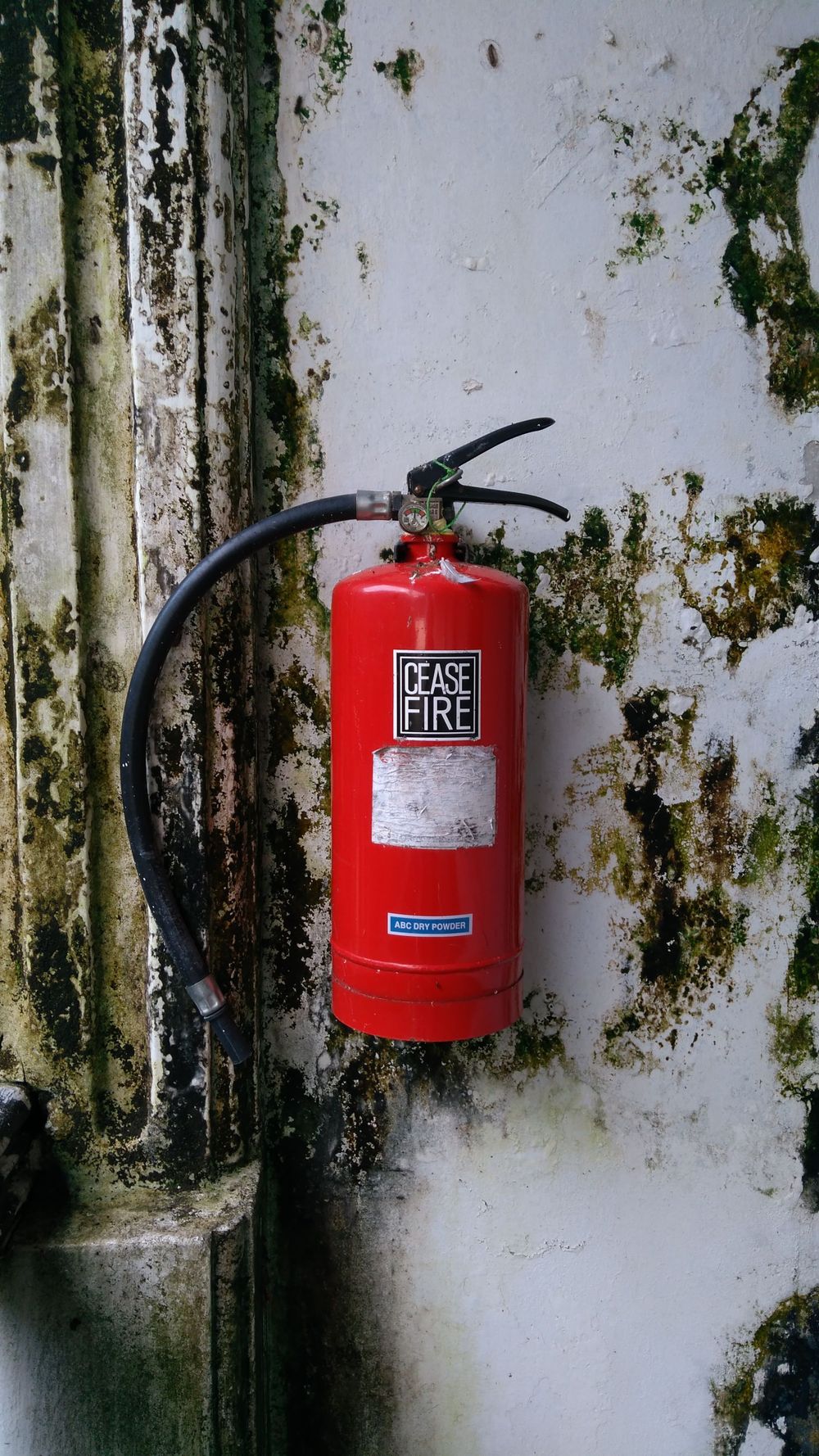
In Ireland, extinguisher bodies are red, with a coloured band or label that tells you what is inside and which fires it is designed for. Using the wrong type — for example water on an electrical fire — can be extremely dangerous. The main types are:
- Water (red label) — for ordinary combustibles such as wood, paper and textiles. Never use on electrical equipment or cooking-oil fires.
- Foam (cream label) — for combustibles and flammable liquids such as petrol or paint.
- Dry powder (blue label) — a versatile option for combustibles, flammable liquids and flammable gases; some are rated for electrical use. Powder reduces visibility, so it is generally avoided indoors where possible.
- Carbon dioxide / CO₂ (black label) — for electrical fires and flammable liquids; leaves no residue, making it ideal around electronics.
- Wet chemical (yellow label) — for cooking-oil and deep-fat fryer fires found in kitchens.
Matching the extinguisher to the fuel is the whole point. To understand which agent suits which fuel, read our companion guide on the classes of fire explained.
Fire Safety training from €35
Self-paced, HSA-aligned, certificate the same day — €35 per person.
When NOT to fight a fire
Knowing when to walk away is just as important as knowing how to use the extinguisher. Your life is always worth more than property. Do not attempt to fight a fire if any of the following are true:
- The fire is larger than a small bin or is spreading quickly.
- There is a lot of smoke — smoke is more likely to kill you than flames.
- You do not have the correct type of extinguisher for the fuel.
- The fire is between you and your only exit, or could cut off your escape.
- You are unsure, untrained or alone with no one aware of the situation.
In any of these cases, raise the alarm, evacuate, close doors behind you to slow the spread, and call 999 or 112. Let the fire service do their job.
Key takeaways
- Remember PASS: Pull the pin, Aim low at the base, Squeeze the handle, Sweep side to side.
- Always keep a clear exit behind you and stay a safe distance from the fire.
- Match the extinguisher to the fuel — water for combustibles, CO₂ for electrical, wet chemical for cooking oil.
- Never fight a fire that is large, smoky, blocking your exit, or beyond your training.
- When in doubt, get out, close the door and call 999 or 112.
Reading about the PASS method is a start, but real confidence comes from proper training. A short, certified Fire course teaches your team to identify extinguisher types, use them correctly and make the right call under pressure — for just €35 per person. Start the Fire course today and give your people the skills that could save a life.