The Fire Warden's Role: Training and Responsibilities
When the alarm sounds, someone has to keep a cool head, get people moving and make sure no one is left behind. That someone is the fire warden — and the role is far more than wearing a high-vis vest once a year.
A fire warden (sometimes called a fire marshal) is a trained member of staff with specific responsibilities for fire safety, both day to day and during an emergency. Appointing wardens is one of the most practical ways an Irish employer meets the duty to protect people on the premises. This article explains exactly what the role involves, how many wardens you need, and why training matters.
What a fire warden actually does
The role splits neatly into two parts: ongoing prevention work and emergency response. On a normal day, the warden is the eyes and ears of fire safety in their area. In an emergency, they become a calm, decisive leader who gets everyone out.
Day-to-day responsibilities
- Carrying out routine checks: making sure escape routes and fire exits are clear and exit signs are visible.
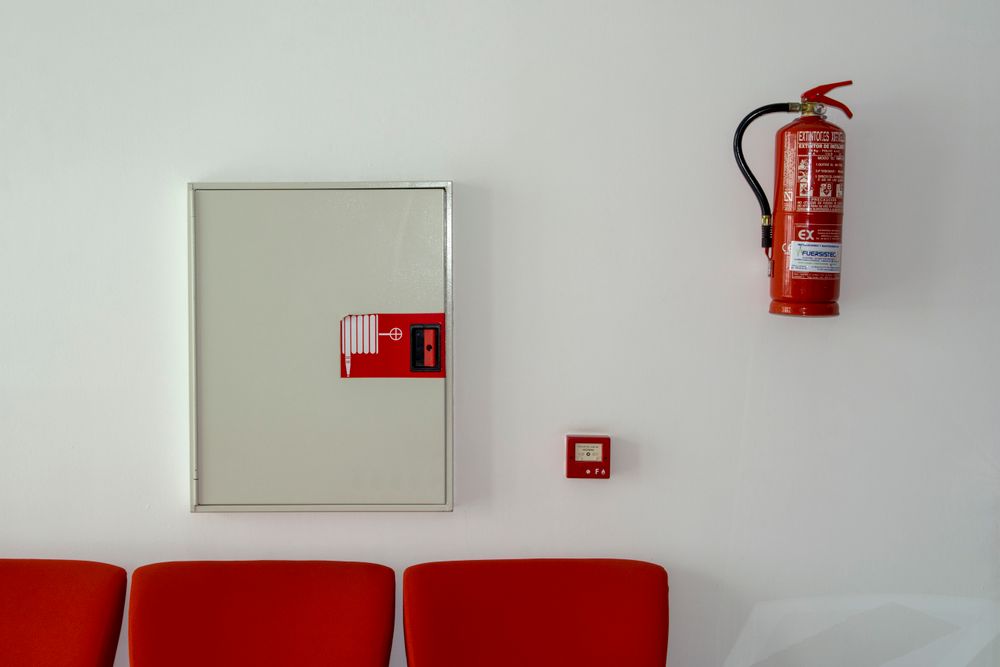
- Checking that fire-fighting equipment, such as extinguishers, is in place, unobstructed and within service date.
- Watching for hazards — overloaded sockets, blocked fire doors, build-ups of combustible waste — and getting them fixed.
- Helping to keep the fire-safety log and reporting concerns to management.
- Knowing who in their area may need extra help to evacuate.
Responsibilities during an evacuation
- Raising and acting on the alarm without delay.
- Directing people calmly to the nearest safe exit and along the escape route.
- Sweeping their designated area to check toilets, store rooms and quiet corners.
- Assisting people with mobility, hearing or visual needs.
- Reporting to the assembly point and taking a roll call so the fire service knows if anyone is missing.
- Stopping people from re-entering the building until it is declared safe.
A fire warden's most important job is not fighting fires — it is making sure every single person gets out and is accounted for.
How many fire wardens do you need?
Irish law does not set a single fixed ratio. Instead, the number you need flows from your fire-risk assessment under the Safety, Health and Welfare at Work Act 2005 and your duties under the Fire Services Acts 1981 and 2003. The right number depends on the size and layout of the building, the number of floors, how many people are present, the hours you operate and the level of risk.
As a sensible rule of thumb, you should have enough trained wardens to cover every floor and every separate area during all working hours — and enough cover for holidays, sick days and shift work so you are never left without one. A good question to ask is simple: if the alarm went off right now, is there a trained warden present for every part of the building? If the honest answer is no, you need more.
When can a warden fight a fire?
Fire wardens are trained to tackle only a small fire that is in its very early stages, when it is safe to do so, with the correct equipment, and never at the expense of their own escape route. If the fire is spreading, producing a lot of smoke, or larger than a small bin, the answer is always to evacuate and let the fire service handle it. Knowing how to use the right extinguisher is essential — our guide on how to use a fire extinguisher covers the PASS method.
Fire Safety training from €35
Self-paced, HSA-aligned, certificate the same day — €35 per person.
Why training is essential
You cannot simply nominate someone and hope for the best. The 2005 Act requires that employees are given the information, instruction and training they need for their safety — and that applies in full to anyone you ask to take on fire-warden duties. Training gives wardens the confidence to act decisively, the knowledge to recognise hazards, and the skills to lead an evacuation under pressure. It also creates a clear record that you have met your duty.
An online Fire course is a fast, affordable way to train your wardens. For just €35 per person they learn the chemistry of fire, the classes of fire, evacuation procedures, extinguisher use and their legal responsibilities — and download a certificate the same day.
Key takeaways
- A fire warden has day-to-day prevention duties and a leading role during evacuation.
- The number you need comes from your fire-risk assessment — cover every area and every shift.
- Wardens tackle only small, early-stage fires with the correct equipment, never blocking their own escape.
- Their priority is full evacuation and an accurate roll call at the assembly point.
- Training is a legal duty under the 2005 Act and is available from €35 per person.
A well-trained fire warden turns a frightening emergency into an orderly, well-rehearsed response. If your workplace does not yet have enough certified wardens, now is the time to fix that. You can browse all our safety courses or enrol your team in the Fire course today.