TILE: The Simple Way to Assess Manual Handling Risk
TILE is the four-letter checklist that turns a vague worry about a heavy job into a clear list of risks you can act on. Standing for Task, Individual, Load and Environment, it is the simplest reliable way to size up any manual handling job. Here is what each letter means, with real Irish workplace examples.
What TILE stands for
TILE breaks a manual handling task into the four things that decide how risky it is: the Task itself, the Individual doing it, the Load being moved and the Environment it happens in. Look at all four together and you get a balanced picture, rather than fixating on weight alone.
The reason TILE works so well is that risk is rarely caused by a single factor. A light box becomes dangerous when it is carried at arm's length, down a cluttered corridor, by a tired worker at the end of a shift. By forcing you to consider all four elements in turn, TILE stops you missing the hidden contributors that combine to cause an injury. It is easy to remember, quick to apply and works for any job from a building site to a hospital ward.
This matters in Ireland because the Safety, Health and Welfare at Work (General Application) Regulations 2007require employers to take exactly these factors into account when assessing manual handling. TILE is simply a memorable way to make sure you cover them all. There is no fixed legal weight limit here; the Health and Safety Authority expects you to judge the real risk, and TILE is how you do that.
T — Task
Look at what the movement actually involves. The further a load travels, the longer it is held, the more often it is repeated and the more twisting or stooping it requires, the higher the risk. Ask:
- Does it involve bending, twisting or reaching above shoulder height?
- Is the load carried a long distance or held for a long time?
- Is the movement repeated frequently with little rest?
Irish example: a kitchen porter in a Galway hotel emptying bins repeatedly across a wet floor faces a high-task risk from the frequency, the distance and the twisting to clear the bins.
I — Individual
People are not interchangeable. The same lift is riskier for some workers than others. Consider:
- Does the task require unusual strength, height or reach?
- Is the person new, pregnant, returning from injury or otherwise more vulnerable?
- Have they been trained in safe handling?
Irish example: a new seasonal worker on a Wexford farm, untrained and unfamiliar with the lifting involved, carries a higher individual risk than an experienced, trained colleague doing the same job.
Manual Handling training from €35
Self-paced, HSA-aligned, certificate the same day — €35 per person.
L — Load
The object itself carries much of the risk. It is not only about weight. Ask:
- Is it heavy, bulky or difficult to grasp?
- Is the contents unstable or likely to shift, such as liquid in a drum?
- Is it hot, cold, sharp or otherwise hazardous to handle?
Irish example: a delivery driver in Cork handling kegs has a high-load risk because the kegs are heavy, awkward to grip and the liquid inside shifts mid-lift.
E — Environment
Where the job happens can make a safe lift dangerous. Check:
- Are floors wet, uneven, cluttered or sloped?
- Is there enough space and headroom to move freely?
- Is lighting poor, or is it very hot, cold or humid?
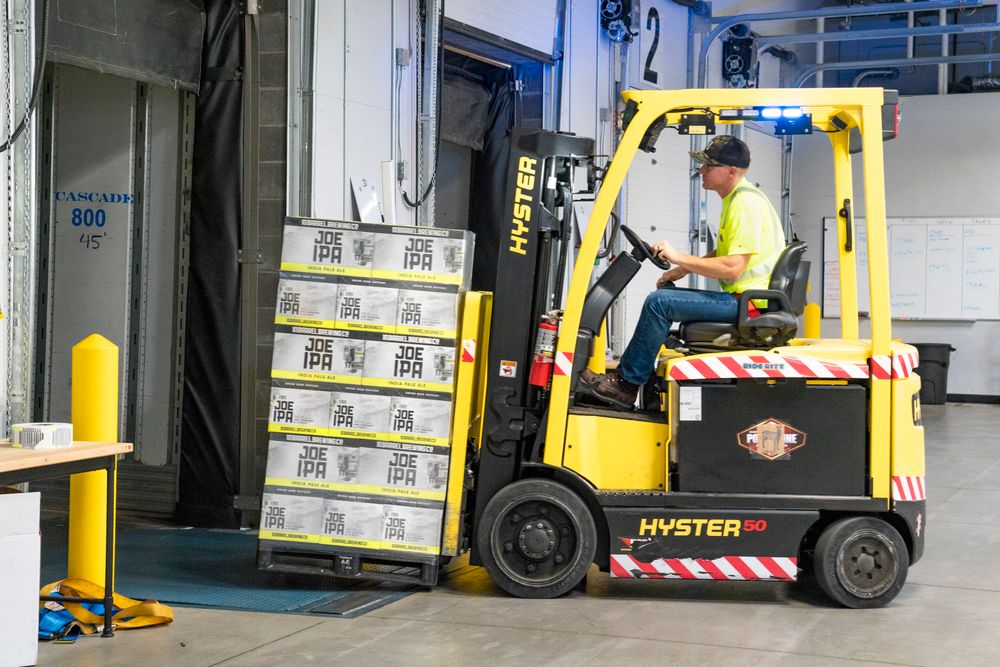
Irish example: a warehouse operative in a chilled distribution centre near Dublin faces a high environmental risk from cold-stiffened muscles, condensation on the floor and tight aisles between racking.
The power of TILE is that it forces you to look beyond the obvious. A modest load becomes high risk in a cramped, wet, cold space — and TILE is what makes you notice.
Turning TILE into action
Spotting risk is only half the job. For every TILE factor that raises a concern, ask what one change would lower it. A trolley shortens the carry, better lighting fixes the environment, splitting a load tackles the weight, and training improves the individual factor. This is the practical engine inside any good manual handling risk assessment, where TILE provides the structure and your controls provide the fix.
TILE also pairs naturally with good lifting habits. Once you have judged a task with TILE, your team still needs to perform the lift well, which is where our guide to safe lifting technique comes in. Together, assessment and technique keep people out of harm's way.
Key takeaways
- TILE stands for Task, Individual, Load and Environment.
- It mirrors the factors the 2007 Regulations require you to assess.
- Weight is only part of the Load — grip, stability and shape matter too.
- The same lift can be safe or dangerous depending on the person and the place.
- Use TILE to find the risk, then pick one practical control for each factor.
TILE is deliberately simple so that anyone can use it on the floor, not just safety professionals. Teach it to your team, build it into your assessments, and back it with proper training. Our HSA-aligned Manual Handling course covers TILE in full and issues a certificate the same day, all for just €35.