Manual Handling Weight Limits: What Irish Law Says
It is the single most common question employers ask us: how many kilograms can a worker legally lift in Ireland? The honest answer surprises people, because Irish law does not set a fixed number. Here is what it does say, and how to work out a safe load in your own workplace.
There is no fixed legal weight limit in Ireland
Let us deal with the myth first. Many people believe there is a magic figure, often quoted as "25 kg", written into Irish law. There is not. Neither the Safety, Health and Welfare at Work Act 2005 nor the Safety, Health and Welfare at Work (General Application) Regulations 2007 states a maximum weight a person may lift at work.
Instead, the law takes a risk-based approach. Chapter 4 of Part 2 of the 2007 Regulationsdeals specifically with manual handling of loads. It places a clear duty on the employer to organise work so that hazardous manual handling is avoided in the first place, and where it cannot be avoided, to assess and reduce the risk. Weight is only one factor in that assessment.
The law does not ask "how heavy is the box?" It asks "is this task likely to injure this person, doing it this way, in this place?" The kilogram on the label is only the start of the answer.
What the law actually requires
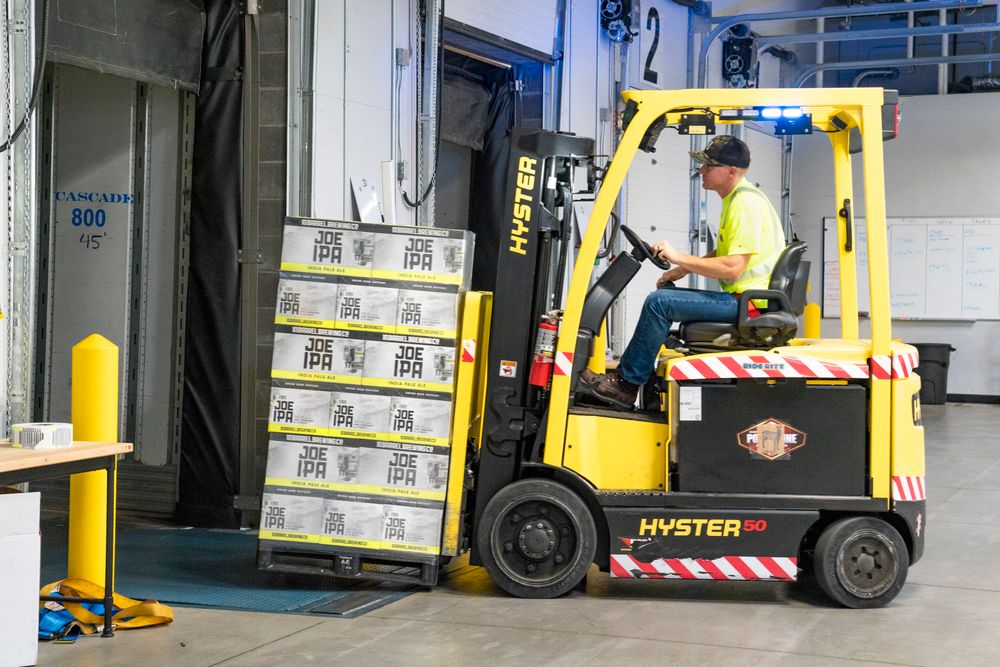
Under the General Application Regulations, the employer's first duty is to avoid the need for hazardous manual handling as far as reasonably practicable. That might mean delivering goods closer to the point of use, using a trolley or pallet truck, or redesigning packaging into smaller units.
Where manual handling cannot be avoided, the employer must carry out a risk assessment that takes account of the task, the load, the working environment and the individual's capability. The Health and Safety Authority (HSA) is the State body that enforces these duties and publishes practical guidance to help employers comply.
The HSA risk-filter approach
Rather than a single legal limit, the HSA promotes a "risk filter" you can think of as guideline weights. These are screening figures, not legal ceilings. They suggest that the safe weight changes dramatically depending on where the load is held in relation to the body. A load held close to the waist is far safer than the same load held at arm's length or above shoulder height.
If a task falls within the lower guideline zones, the risk is likely to be acceptable for most of the working population. If it exceeds them, that is a signal to look harder and, almost always, to carry out a detailed assessment. The guideline figures are also lower for women than for men on average, reflecting population data rather than any judgement about an individual.
Manual Handling training from €35
Self-paced, HSA-aligned, certificate the same day — €35 per person.
Factors that lower the safe load
This is the part most people miss. A weight that is comfortable in ideal conditions can become dangerous the moment the conditions change. The following factors all push the safe load downwards, often well below any guideline figure:
- Distance from the body. The further a load is held from the spine, the greater the strain. Holding 10 kg at arm's length can load the back more than 20 kg held close.
- Twisting and reaching. Turning the trunk while lifting, or stretching to reach, multiplies the risk of injury.
- Lifting from the floor or above the shoulders. Loads handled outside the "power zone" between hip and shoulder height are far harder on the body.
- Frequency and duration. A weight lifted once is very different from the same weight lifted hundreds of times across a shift.
- Awkward or unstable loads. Items with no handles, shifting contents, sharp edges or an uneven balance are riskier than their weight suggests.
- The environment. Restricted space, slippery or uneven floors, poor lighting, steps, and hot or cold conditions all reduce what can be handled safely.
- The individual. Age, health, pregnancy, fitness, previous injury and even clothing affect what a person can lift without harm.
Because all of these interact, two workers lifting identical boxes in different parts of the same building can face completely different levels of risk. That is exactly why the law avoids a one-size-fits-all number.
Why a full assessment is still essential
Guideline weights are a screening tool, not a defence. If something goes wrong and you relied only on a number from a poster, you will struggle to show you met your duties under the 2007 Regulations. A proper manual handling risk assessment records the task, the load, the environment and the person, and then sets out the controls you have put in place.
Training underpins all of it. Workers who understand the principles of safe handling, and who can recognise when a task has drifted outside safe limits, are your best protection against injury. That is why competent safe lifting techniquetraining is a legal expectation, not a nice-to-have. Our online Manual Handling course is HSA-aligned, takes about an hour, and issues a certificate the same day from just €35.
Key takeaways
- Irish law sets no fixed legal weight limit for manual handling.
- The 2005 Act and Chapter 4 of Part 2 of the 2007 Regulations require employers to avoid, assess and reduce the risk.
- HSA guideline weights are a risk filter, not a legal ceiling, and change with how a load is held.
- Distance, twisting, height, frequency, load shape, environment and the individual all lower the safe load.
- A documented risk assessment plus competent training is how you actually meet your duties.
In short, stop chasing a magic kilogram figure. Assess the real task in front of you, train your people, and let the controls — not a number on a poster — keep them safe.