← Exit
Module 1 · Introduction to Lifting Operations0% complete · 18 slides left
LOLER
LOLER
Module 1
This course contains audio. Use headphones in public places.
Introduction
Introduction

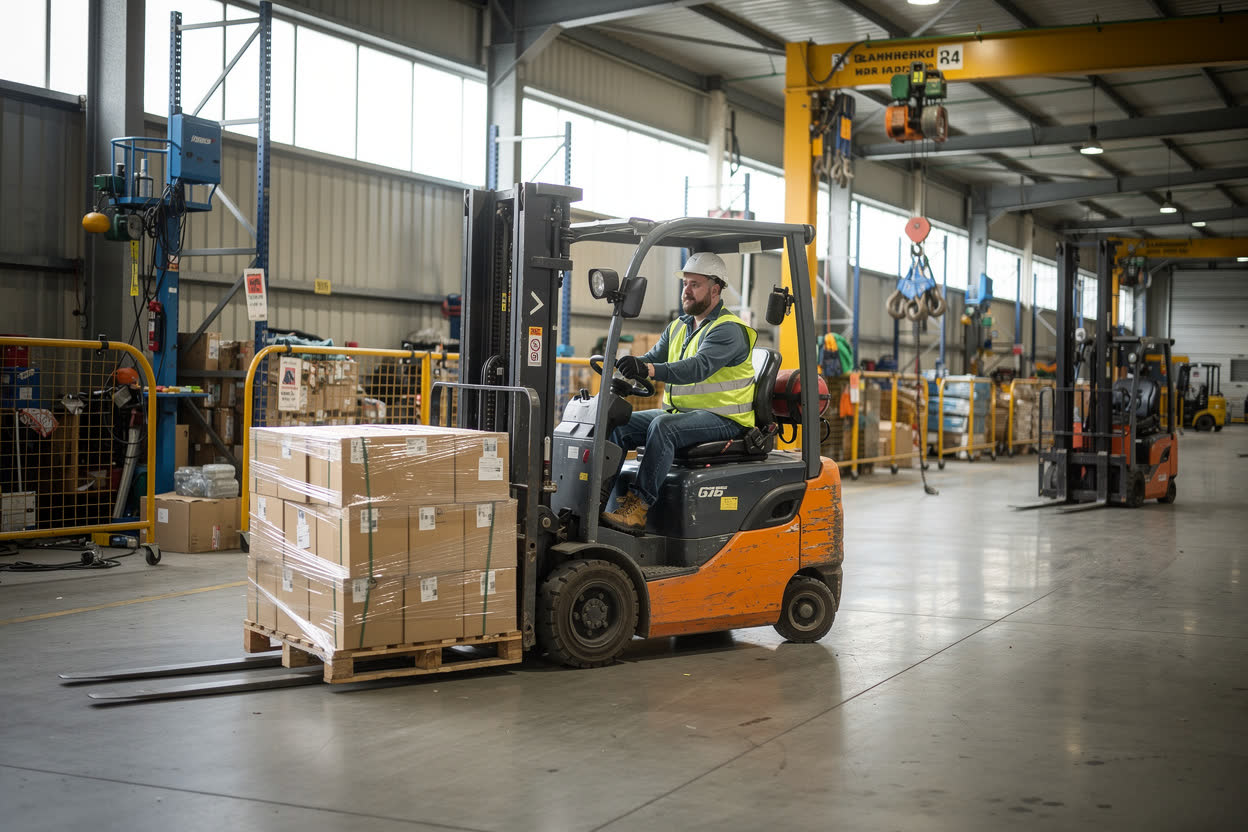
Lifting equipment is found in almost every type of workplace: factories, construction sites, warehouses, shops, care homes, hospitals, offices and catering kitchens.

Used correctly, it brings real benefits. It removes or greatly reduces the need to handle heavy loads by hand, which lowers the risk of manual handling injuries.

But lifting equipment that is chosen, used or maintained badly can kill or seriously injure people. The law applies to every lifting operation carried out at work, including work by charities and other not-for-profit bodies, and lifting done by people working in private homes.
Course Aims
Course Aims

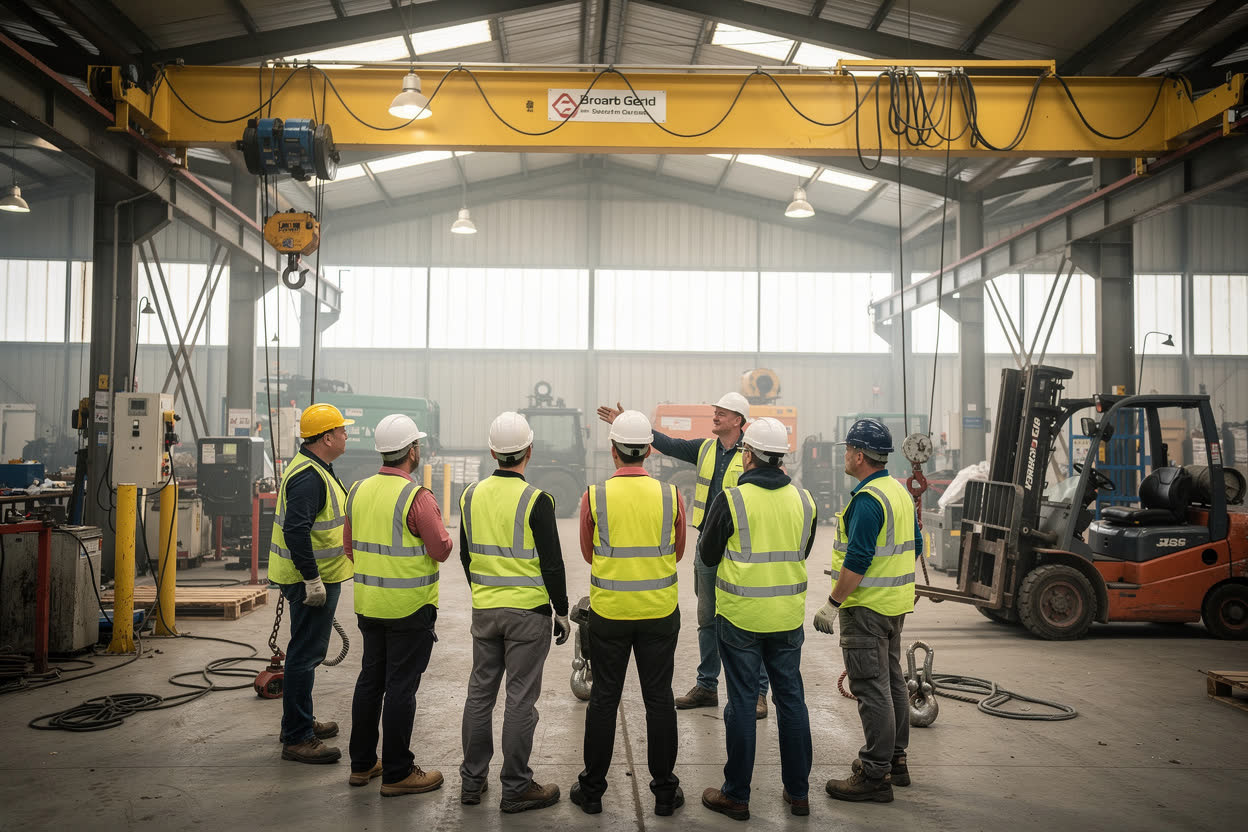
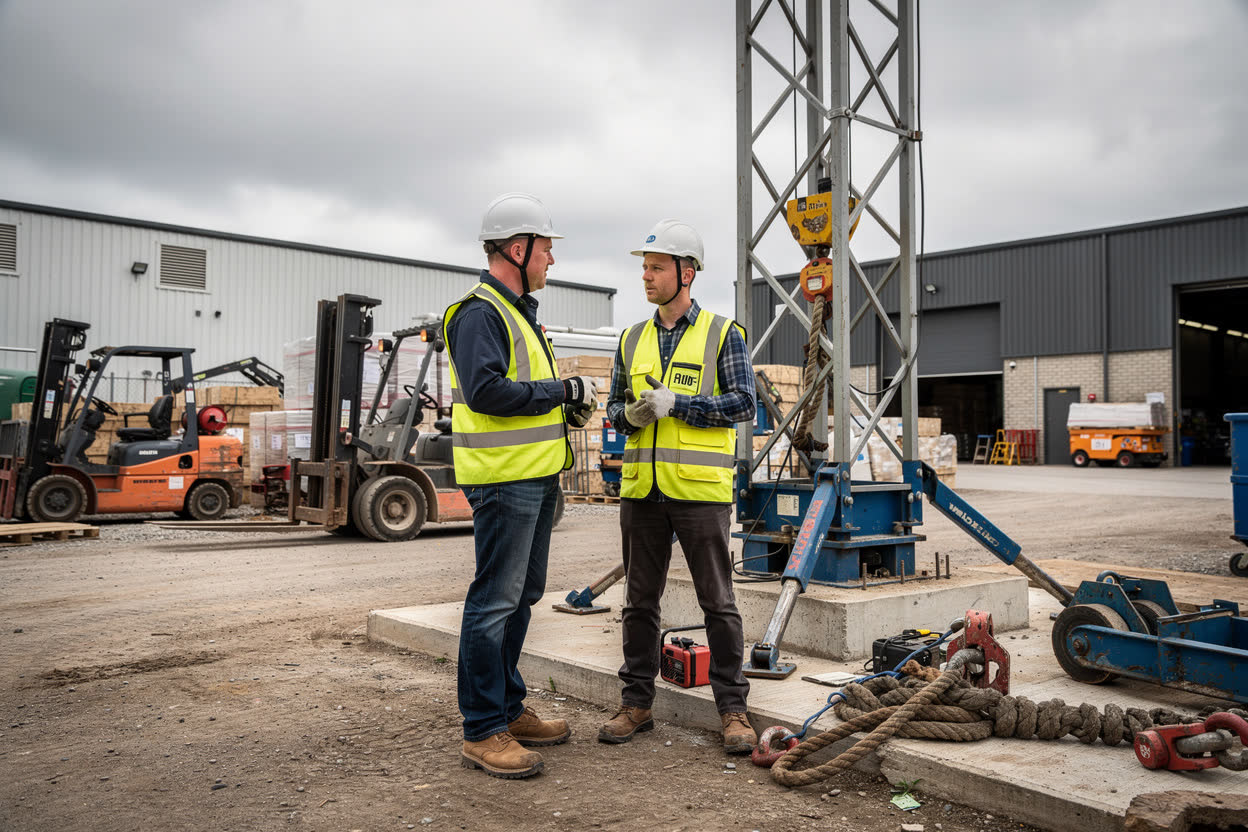
By the end of this course, you will understand:

  • The main duties under the Irish law on lifting equipment, and other relevant legislation.
  • The main risks of lifting operations and equipment, and how to control them.
  • How to carry out a risk assessment of lifting operations.
  • How to select, position and install lifting equipment safely.
  • How lifting operations should be planned and supervised.
  • Safe working loads, and why they must never be exceeded.
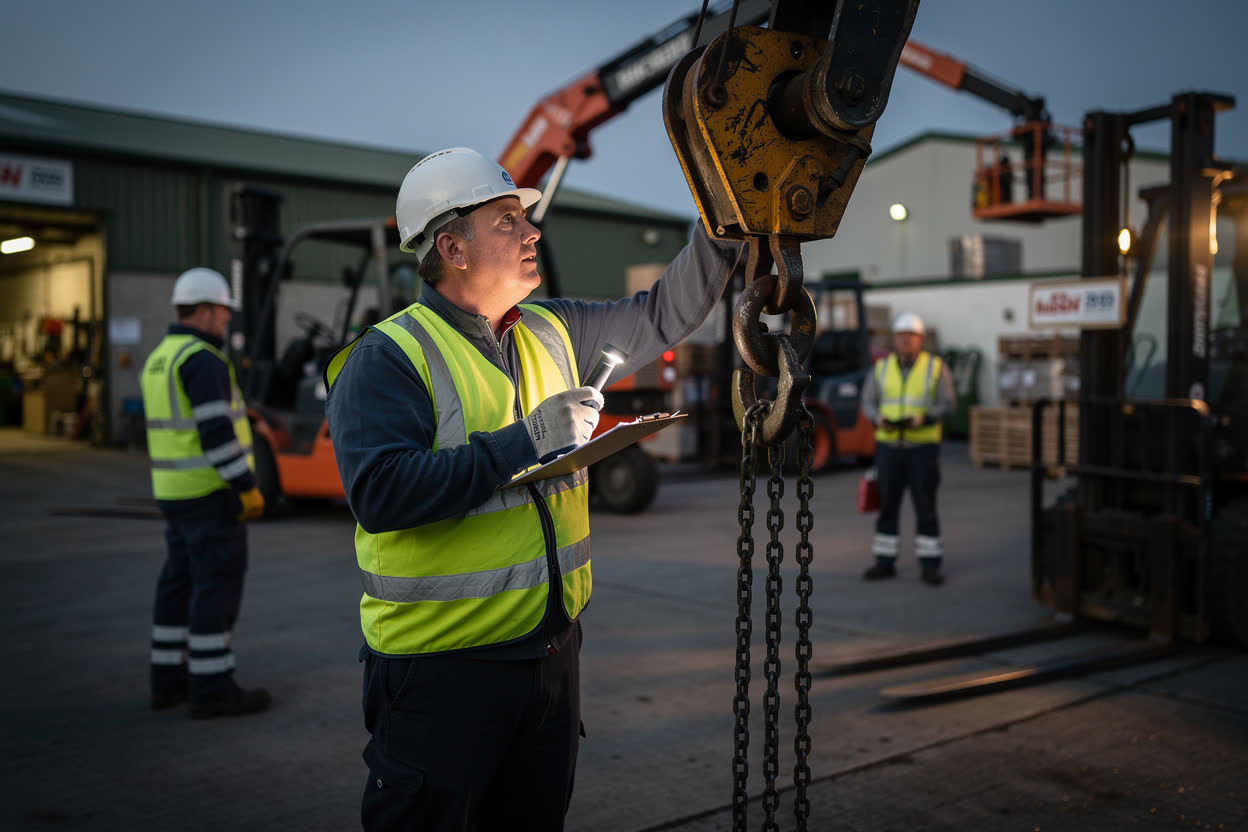
  • Thorough examinations, inspections and pre-use checks.
LOLER and Irish Law
LOLER and Irish Law

LOLER is short for the Lifting Operations and Lifting Equipment Regulations. That is the name of the UK law, but the term is widely used across the lifting industry.

In Ireland, the law is set out in the Safety, Health and Welfare at Work (General Application) Regulations 2007, as amended. Part 2, Chapter 2 of these Regulations covers the use of work equipment, and includes specific rules for lifting equipment. They require:

  • Safe selection, strength and stability of lifting equipment and accessories.
  • Correct marking, examination and maintenance.
  • Proper organisation, planning and supervision of lifting operations.
In This Module
In This Module

In this module, you will learn about:

  • Key terms: lifting operation, lifting equipment and load.
  • Who has duties under the law.
  • The general duties of employees.
  • Other relevant legislation.
  • Lifting equipment and lifting accessories.
  • Equipment that falls outside the lifting rules.
  • The main risks of lifting operations.
Key Terms
Key Terms

There are three key terms you need to know:

  • A lifting operation is an operation concerned with the lifting or lowering of a load.
  • Lifting equipment is any work equipment used for lifting or lowering loads. This includes the accessories and attachments used for anchoring, fixing or supporting it.
  • A load is anything lifted or lowered by lifting equipment. It may be materials, people or animals, or a combination of these.
Who Has Duties?
Who Has Duties?

The law places duties on employers, and on others such as contractors, who have any control over lifting equipment, the way it is used, or the people who use it.

  • This includes every business whose employees use lifting equipment, whether the equipment is owned or hired.
  • Self-employed people have duties for the lifting equipment and accessories they use at work.
  • If an employee brings their own lifting equipment to work, the legal duty still rests with their employer.

The aim is that lifting equipment is safe, so that people at work and anyone else who could be affected are protected.

Further Legal Requirements

The lifting equipment regulations also require that:

  • Lifting operations are properly planned and supervised by a competent person, meaning someone with suitable qualifications, training, experience and skills.
  • Reports of thorough examinations are provided and kept, and any defects reported are put right within the time stated in the report.
  • Where the competent person advises that equipment should stop being used immediately, they send a copy of the report to the Health and Safety Authority, or HSA, within twenty days.
Duties of Employees
Duties of Employees

The lifting equipment regulations place duties on employers rather than employees. However, under the Safety, Health and Welfare at Work Act 2005, every employee must take reasonable care of their own safety and that of others. Employees must:

  • Co-operate with the health and safety procedures and controls their employer puts in place.
  • Use work equipment correctly, in line with the training and instructions given.
  • Never misuse or interfere with anything provided for safety, such as guards or protective equipment.
  • Report any hazard or defect to their employer or line manager straight away.
Other Relevant Legislation

The Safety, Health and Welfare at Work Act 2005 sets out the general duties for all work activities. Employers must ensure, so far as is reasonably practicable, the safety, health and welfare of their employees, and of other people affected by their work, such as members of the public.

The Act also places duties on manufacturers and suppliers, including suppliers of lifting equipment and accessories.

Importantly, it requires every employer to identify hazards, assess the risks, and put suitable controls in place. This is the risk assessment, which we look at in the next module.

The Work Equipment Rules

Lifting equipment is work equipment. So, as well as the specific lifting rules, it must also meet the general work equipment requirements of the General Application Regulations 2007.

These require all work equipment to be:

  • Suitable for its intended use.
  • Properly maintained in a safe condition.
  • Used, supervised or managed only by people who have received adequate information, instruction and training.
Examples of Lifting Equipment

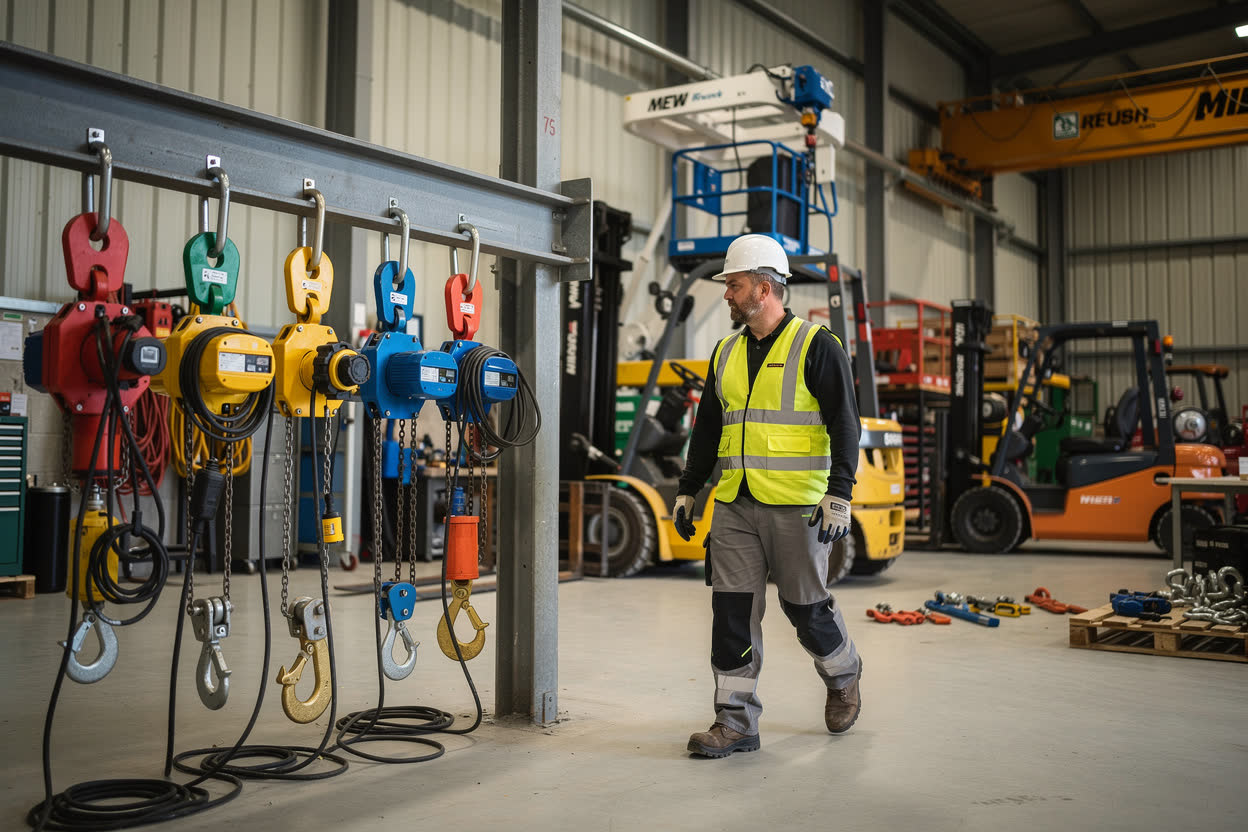
The lifting rules cover a wide range of equipment. Examples include:

  • Cranes, such as mobile cranes, overhead travelling cranes and tower cranes.
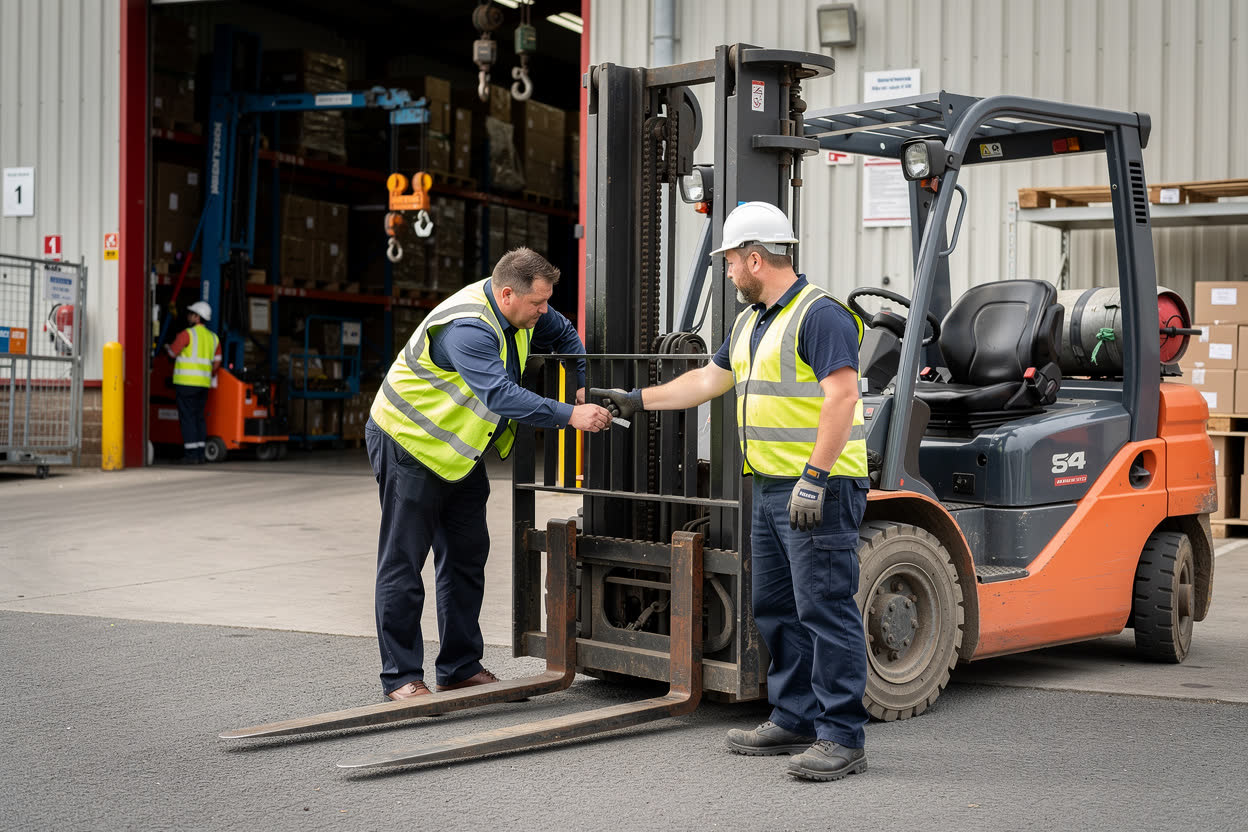
  • Hoists, and forklift trucks of all types.
  • Simple systems, such as a rope and pulley used to raise a bucket on site, or a dumb waiter in a restaurant.
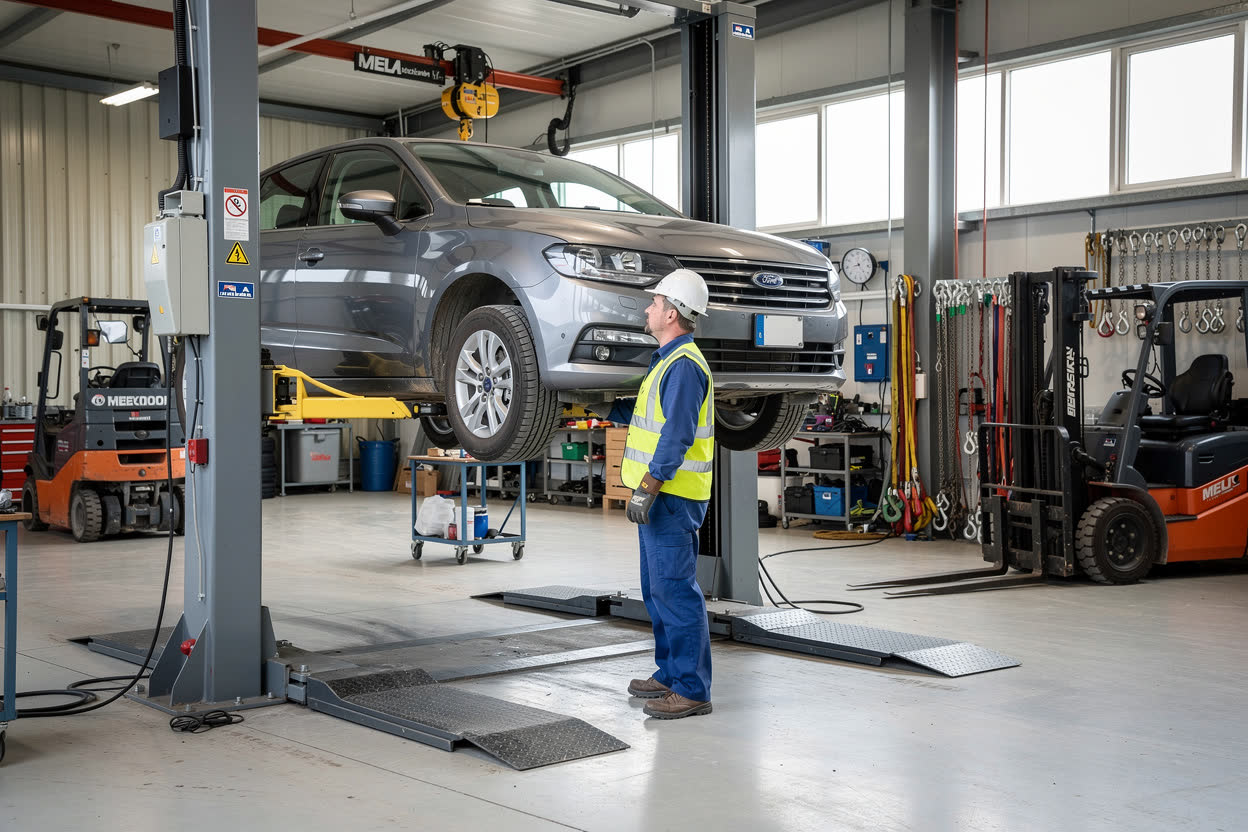
  • Vehicle inspection hoists, and vehicle tail lifts.
  • Lorry-mounted loading cranes.
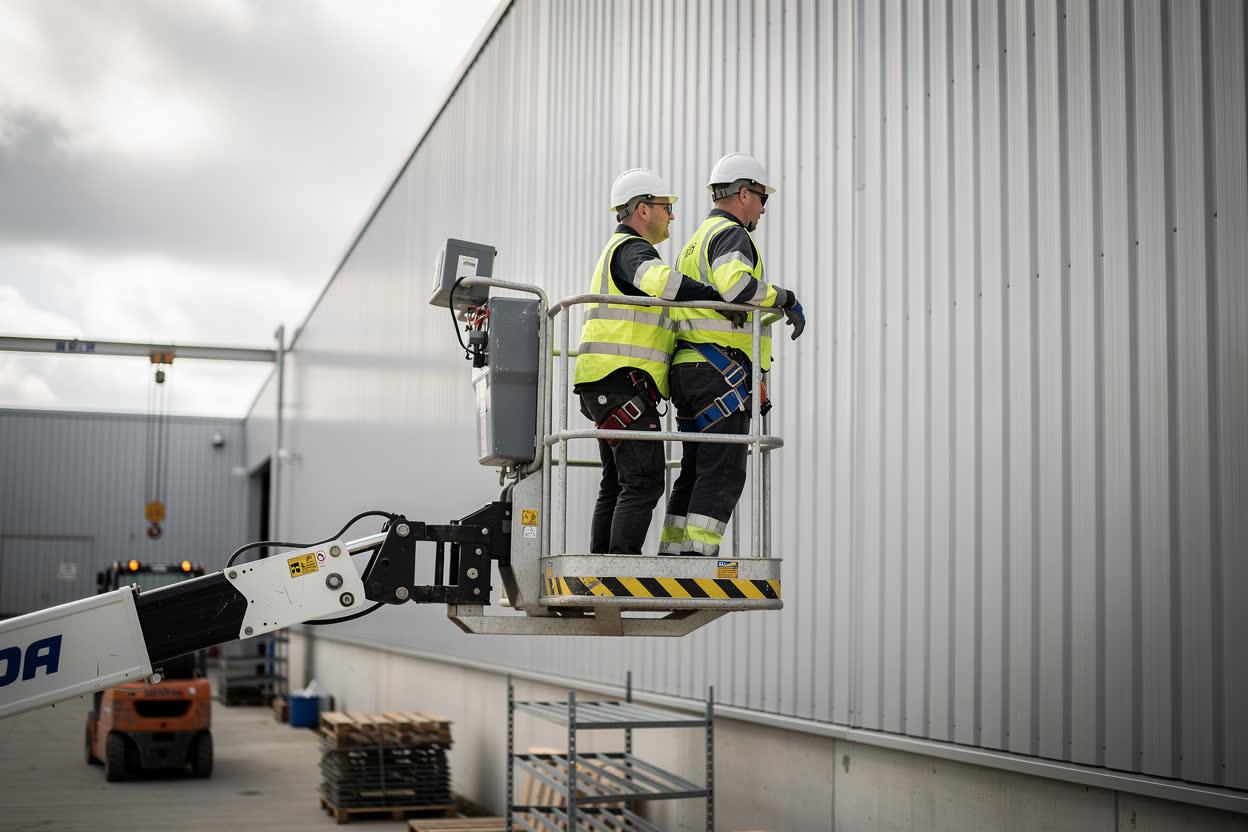
  • Mobile elevating work platforms, or MEWPs, and building cleaning cradles.
  • Goods and passenger lifts, and patient hoists.
  • Winches used for lifting, but not for pulling loads along the ground.
Lifting Accessories
Lifting Accessories

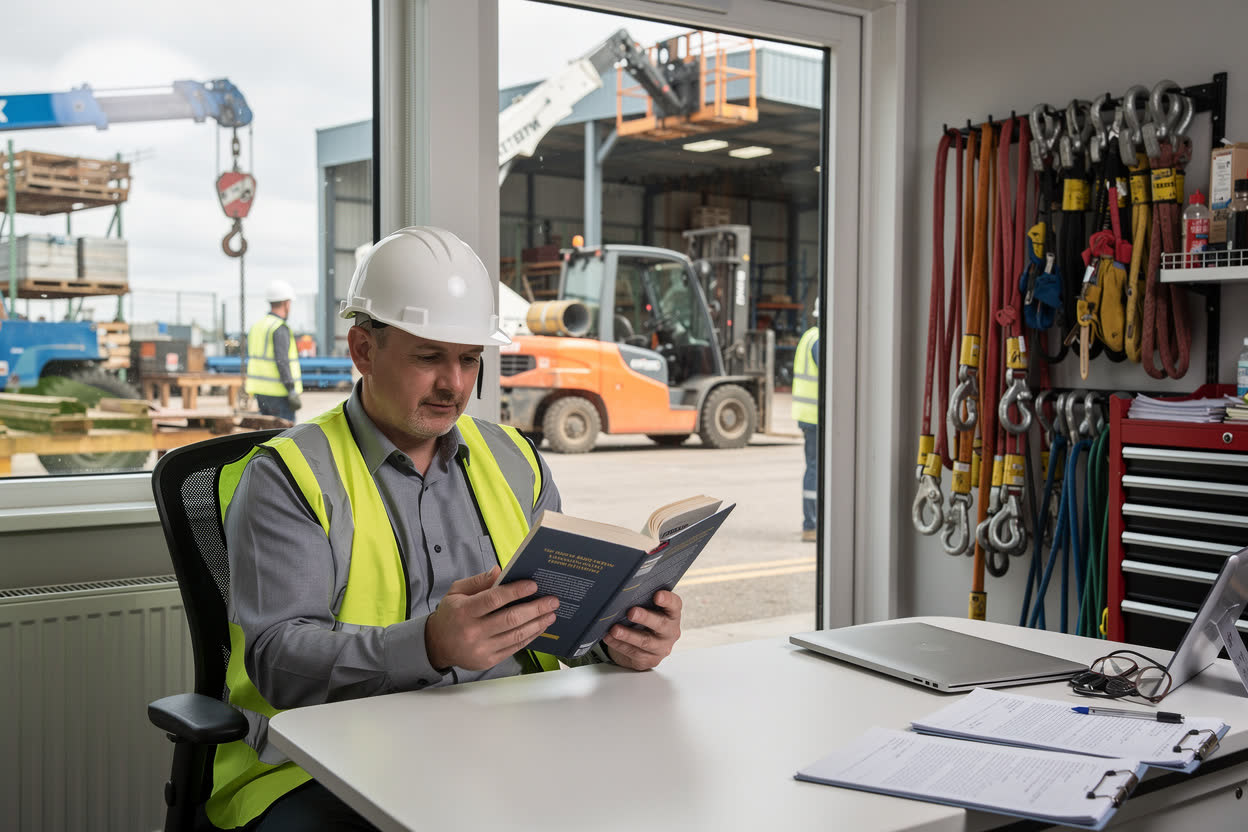
Lifting accessories are used to attach the load to the lifting equipment. They are also covered by the law, and they must be included in the risk assessment, as they are a core part of every lift.

Examples of lifting accessories include:

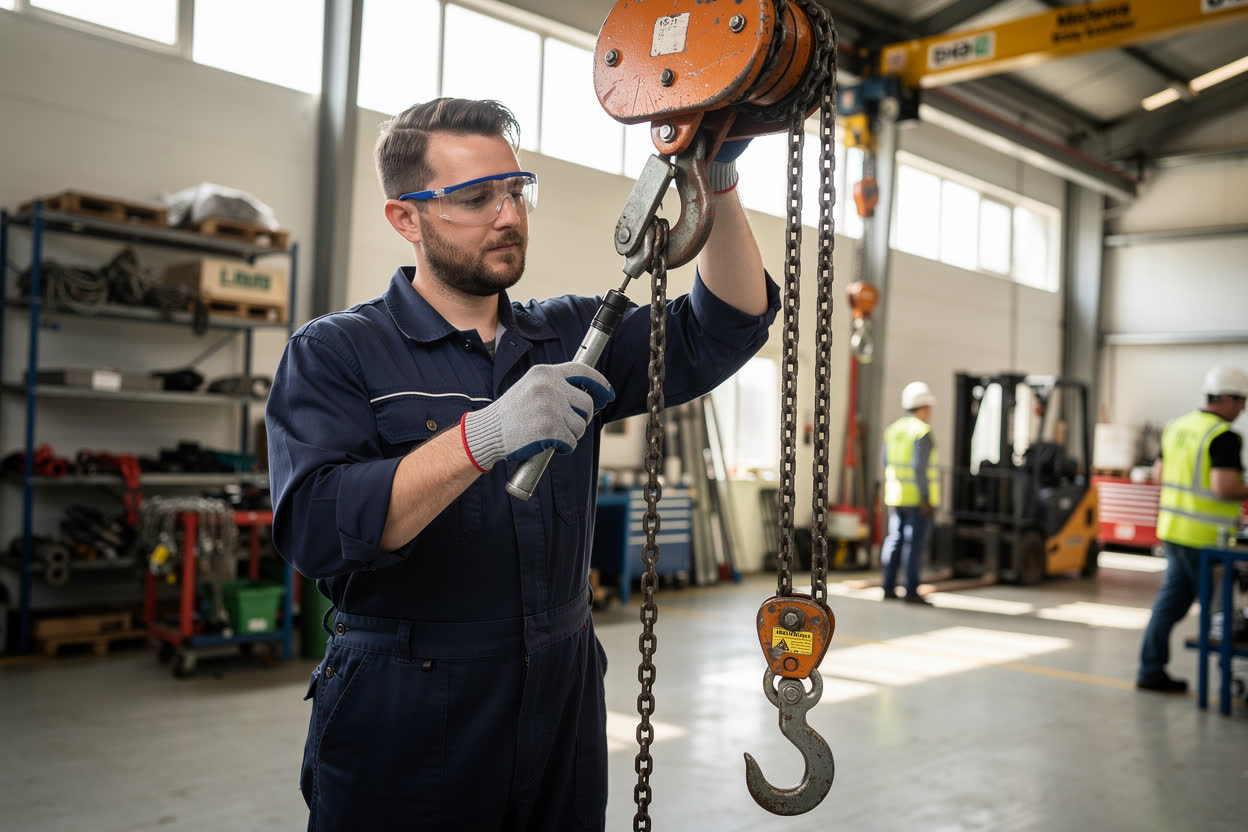
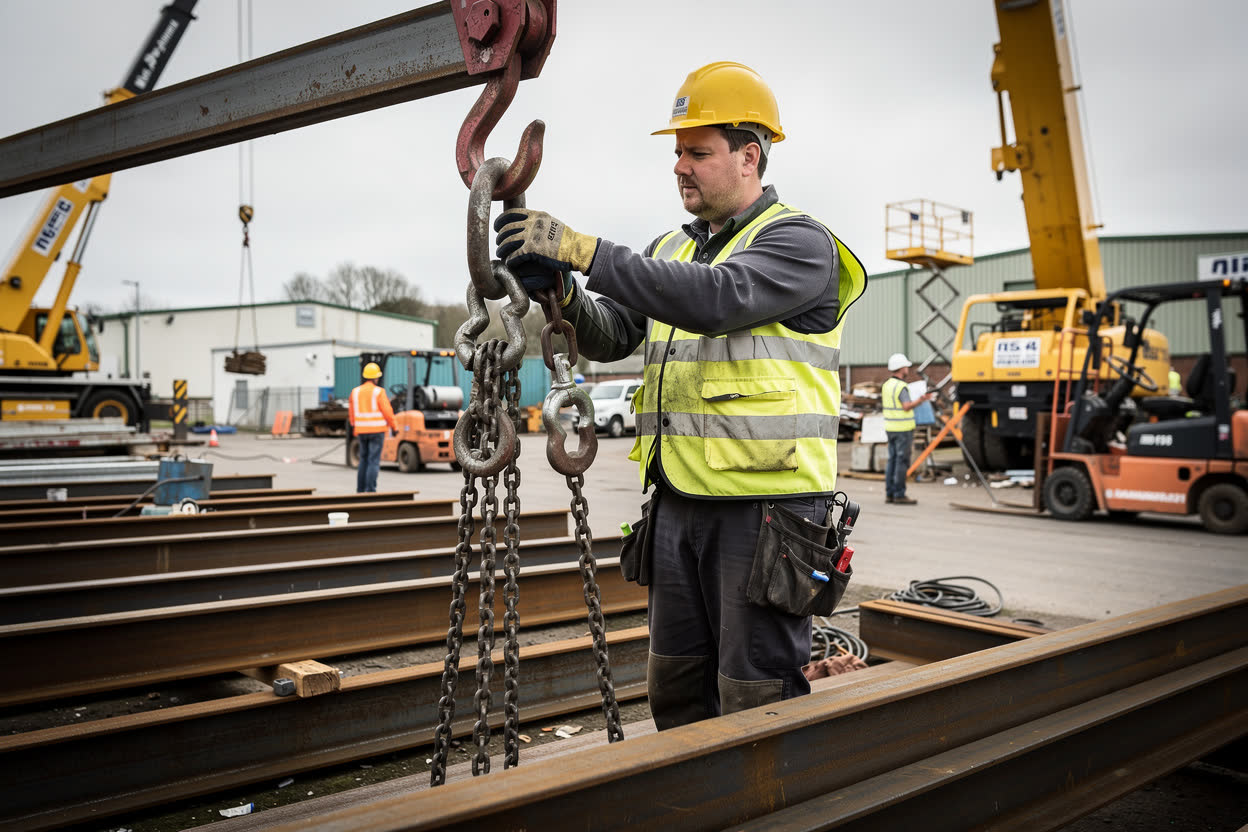
  • Chains, with one or more legs.
  • Fibre and rope slings.
  • Eyebolts, shackles and hooks.
  • Spreader beams.
  • Magnetic and vacuum lifting devices.
What Is a Load?
What Is a Load?

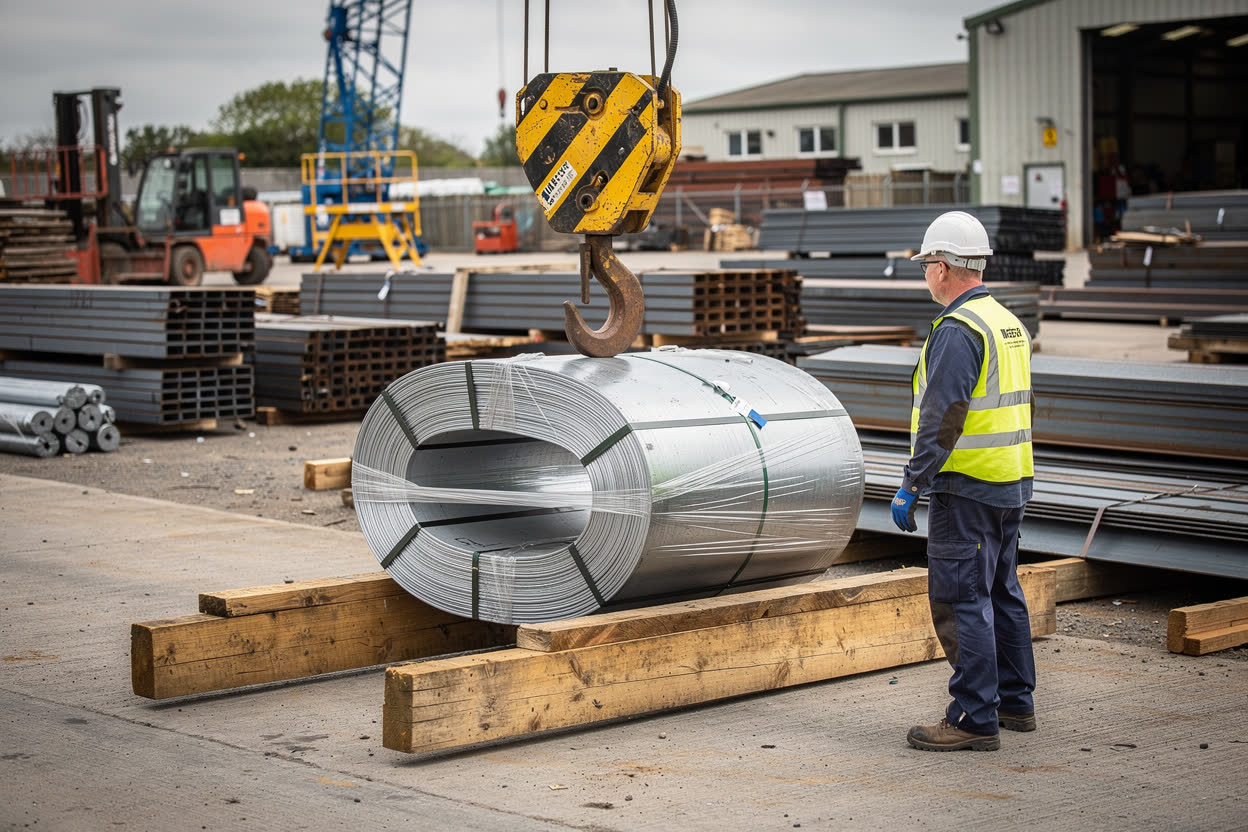
Anything raised, lowered or moved with lifting equipment is a load, whether it is living or not. Examples include:

  • Sacks, bags, boxes and crates.
  • Machinery, and work equipment lifted into or out of position.
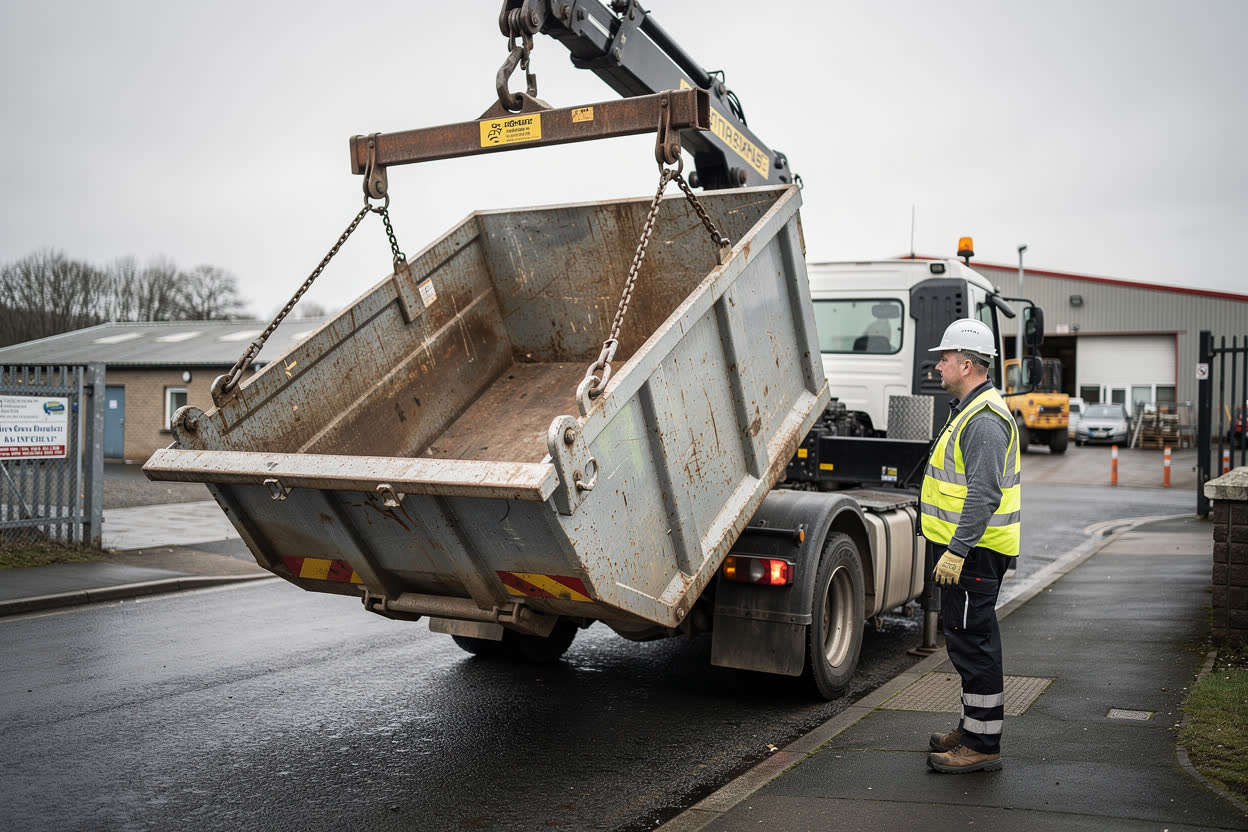
  • Skips, pallets and stillages.
  • People and animals.

Lifting points that are permanently or semi-permanently fixed to a load, such as the lugs on the side of a skip, are treated as part of the load.

Equipment Outside the Lifting Rules

Some equipment is not covered by the specific lifting rules, although the general work equipment rules still apply. Examples include:

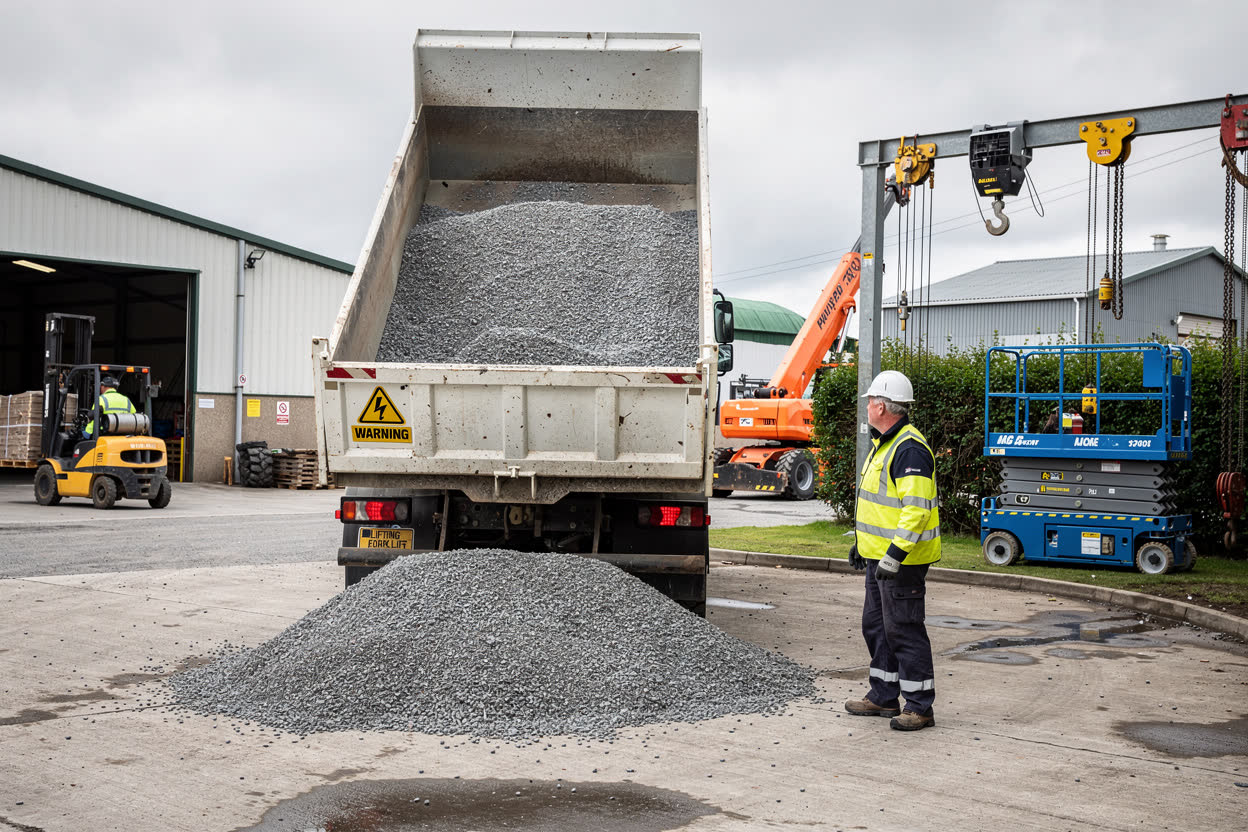
  • Tipper trucks.
  • Roller shutter doors and conveyor belts.
  • Escalators and moving walkways.
  • Fall arrest equipment.
  • Dentist chairs.

Passenger lifts used mainly by the public, such as in shopping centres, may also fall outside the lifting rules. However, the general duties of the 2005 Act still apply, and these lifts must still be maintained and examined. Ships’ own equipment is covered by merchant shipping law instead.

What Are the Risks?
What Are the Risks?

Whether it is a forklift in a warehouse, a crane on site, a dumb waiter in a restaurant or a patient hoist in a care home, every lifting operation involves hazards. Typical risks include:

  • Mechanical hazards, such as moving parts, sharp edges, hot or cold parts, and trapping points.
  • Choosing the wrong equipment or accessories, often because untrained people make the selection.
  • Failing to plan or supervise the lift.
  • Faults or failures in the equipment or accessories.
  • Falling loads, from misuse or equipment failure.
Further Risks
Further Risks

Other risks include:

  • Falls from height when lifting people, for example in care settings, or when using MEWPs and cherry pickers.
  • Crushing injuries, when lifting equipment is not properly managed and controlled, because of poor training, poor supervision or misuse.
  • Equipment deteriorating, and tripping hazards, when equipment is not used and stored properly.

In the rest of this course, we look at these risks in more detail, and at how they can be controlled.

Summary

In this module, you have learned that:

In Ireland, lifting equipment is covered by the General Application Regulations 2007, which deal with selection, marking, examination and planning.

Duties fall on employers and anyone who controls lifting equipment. Employees must work safely, follow instructions and report hazards.

Lifting equipment and accessories include cranes, hoists, forklifts, MEWPs, chains, slings and shackles. Tipper trucks and escalators are not covered.

In the next module, we will look at risk assessment for lifting operations.

Knowledge Check
Which of these is covered by the lifting equipment rules?
Select one answer, then press Check.
A tipper truck
An escalator
A vehicle inspection hoist
A conveyor belt
Correct. Vehicle inspection hoists are lifting equipment. Tipper trucks, escalators and conveyor belts fall outside the specific lifting rules.
Not quite. Tipper trucks, escalators and conveyor belts are not covered by the specific lifting rules. Look for the equipment that lifts and lowers a load.
Get the full course →Answer the question to unlock the next module.
Page 1 of 19