← Exit
Module 1 · Introduction to Ladder Safety0% complete · 13 slides left
Ladder Safety
Ladder Safety
Module 1
This course contains audio. Use headphones in public places.
Introduction
Introduction

Falls from height still kill and seriously injure workers every year, and a great many of those falls start on a ladder. Figures from the Health and Safety Authority, or HSA, show the same two failures again and again: the wrong access equipment was chosen, or the right equipment was used badly.

Nobody should use a ladder or stepladder at work until their employer has given them the training, instruction and information they need to use it safely.

Who This Course Is For

This course is a practical guide to working safely with leaning ladders and stepladders. It is written for employers, managers and supervisors, and for the people who do the climbing.

Where a point covers both types of equipment, we say ladders and stepladders. Where something applies to only one of them, we name that one on its own.

Everything you learn here applies at home as well. In fact, far more ladder accidents happen at home than at work, so the same rules are worth following wherever you climb.

Course Aims
Course Aims

By the end of this course, you will be able to:

  • Explain why safe use of ladders and stepladders matters at work.
  • Describe what the law expects of employers and of the people who use ladders.
  • Take part in a risk assessment for ladder and stepladder work.
  • Carry out a pre-use check, and know what a detailed inspection covers.
  • Store, carry and set up ladders and stepladders correctly.
  • Climb and work from them safely.
What Is Work at Height?

Work at height means work in any place where, if no precautions were taken, a person could fall a distance liable to cause personal injury. That includes work above ground level, work near an edge or an opening, and even work at ground level next to an excavation or a hole.

There is no minimum height. The definition is about the harm a fall could cause, not about a particular number of metres. Using a ladder or a stepladder at work is always work at height.

Even Short Falls Cause Serious Injury

Many people think a fall from a stepladder or the bottom of a ladder is nothing to worry about. It is not. Even a fall from one or two metres can cause broken bones, serious head injuries, or worse.

Many serious ladder injuries happen at quite low heights, often during quick jobs that seemed too small to plan. Every ladder task deserves the same care, however short the climb.

Ladders Are Not Banned

A common myth is that health and safety law has banned ladders. It has not. Part 4 of the Safety, Health and Welfare at Work (General Application) Regulations 2007, which deals with work at height, allows ladders to be used.

The condition is that a risk assessment shows a ladder is a sensible choice. That means the work must be low risk and short duration. Where it is, a ladder or stepladder can be the right tool for the job.

Why Ladder Safety Matters

When the equipment suits the job, and the people using it are trained, the benefits show quickly:

  • Fewer accidents. A fall can cost a worker months of earnings, and some falls end a career.
  • Lower costs. When someone is injured, cover must be found and projects slip.
  • The legal duty to protect workers is met.
  • Better productivity, because competent workers get more done.
  • Better morale, because staff can see that safety genuinely matters.
How Ladder Accidents Happen

Trace a ladder injury back to its cause, and you will usually find one of these:

  • Using a ladder when the work could have been done another way, or with safer equipment.
  • Choosing the wrong type of ladder for the task.
  • Climbing equipment that is already damaged.
  • Standing on the top rungs or the top steps.
  • Leaving the ladder unsecured.
  • Overreaching to the side, instead of climbing down and moving the ladder. This is one of the most common causes of falls.
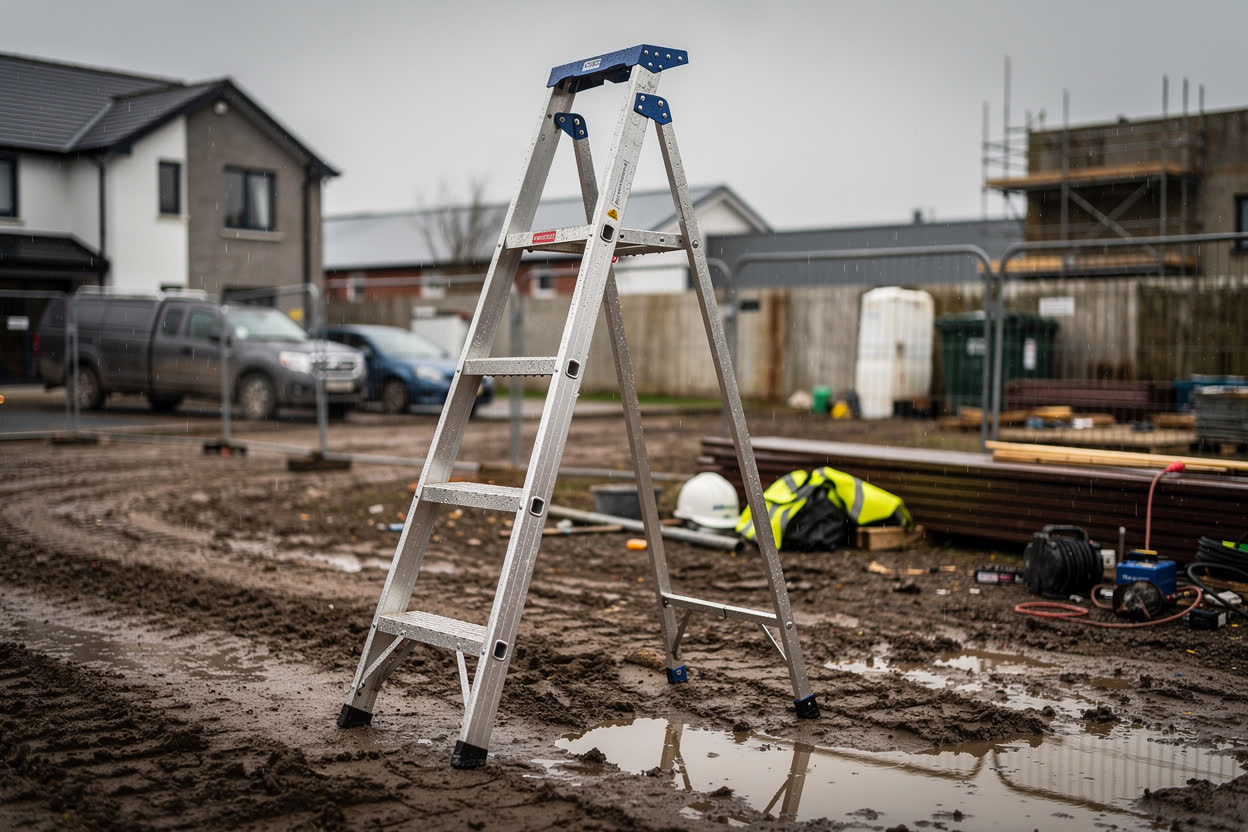
  • Working in strong wind or heavy rain, or with muddy rungs or unsuitable footwear.
Who Is at Risk?
Who Is at Risk?

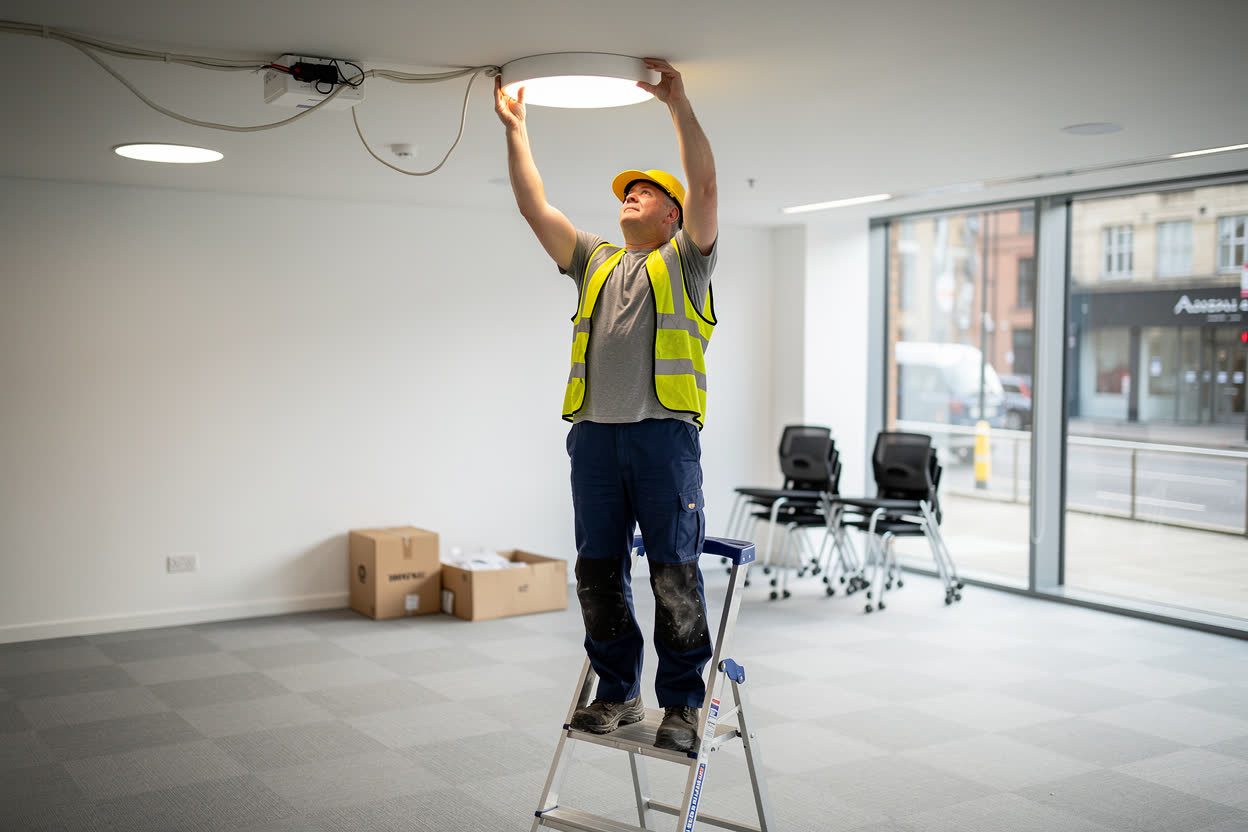
Ladders and stepladders are used across a wide range of work, including:

  • Construction, roofing and glazing.
  • Getting into and out of excavations.
  • Building maintenance, window and gutter cleaning, and painting and decorating.
  • Electrical, plumbing and building services work.
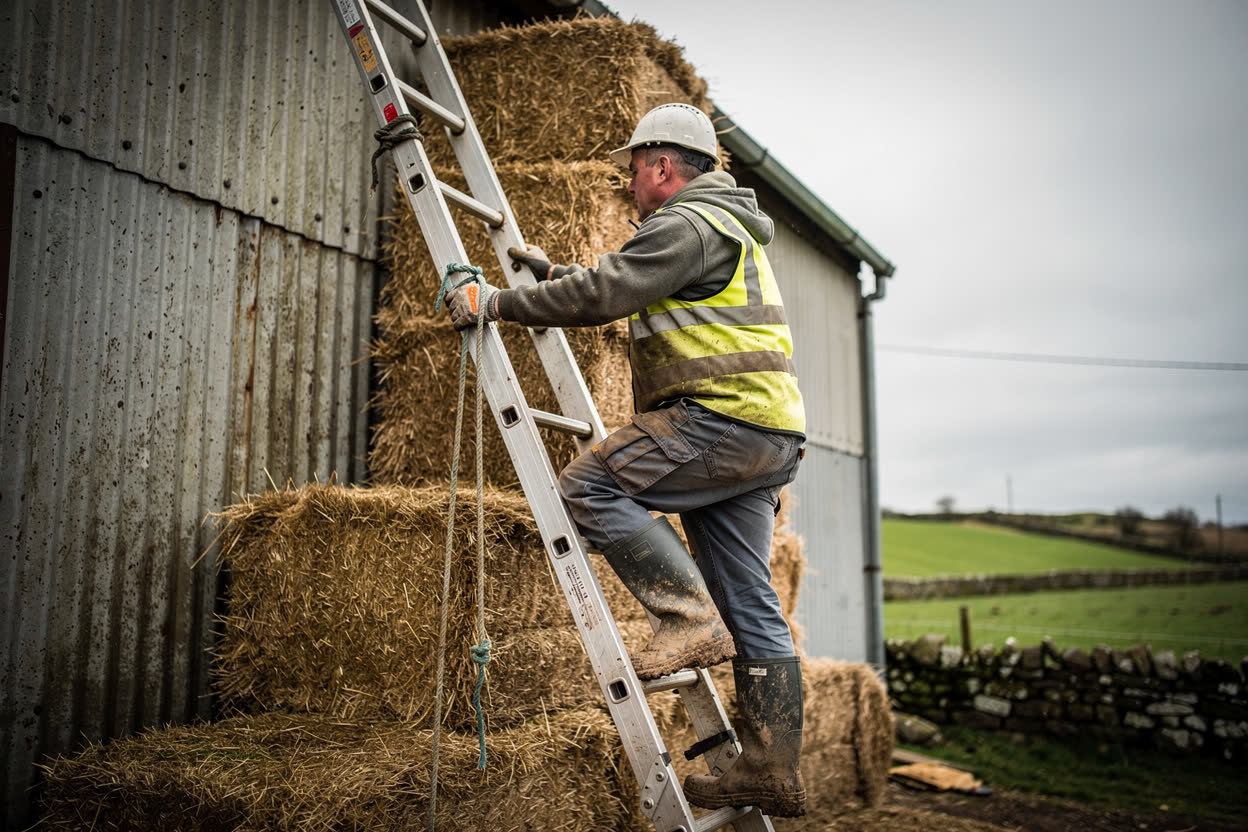
  • Farming, forestry and tree surgery.
  • Street works, such as cabling and lighting.
  • Shops and warehouses.
Case Study: The Fall

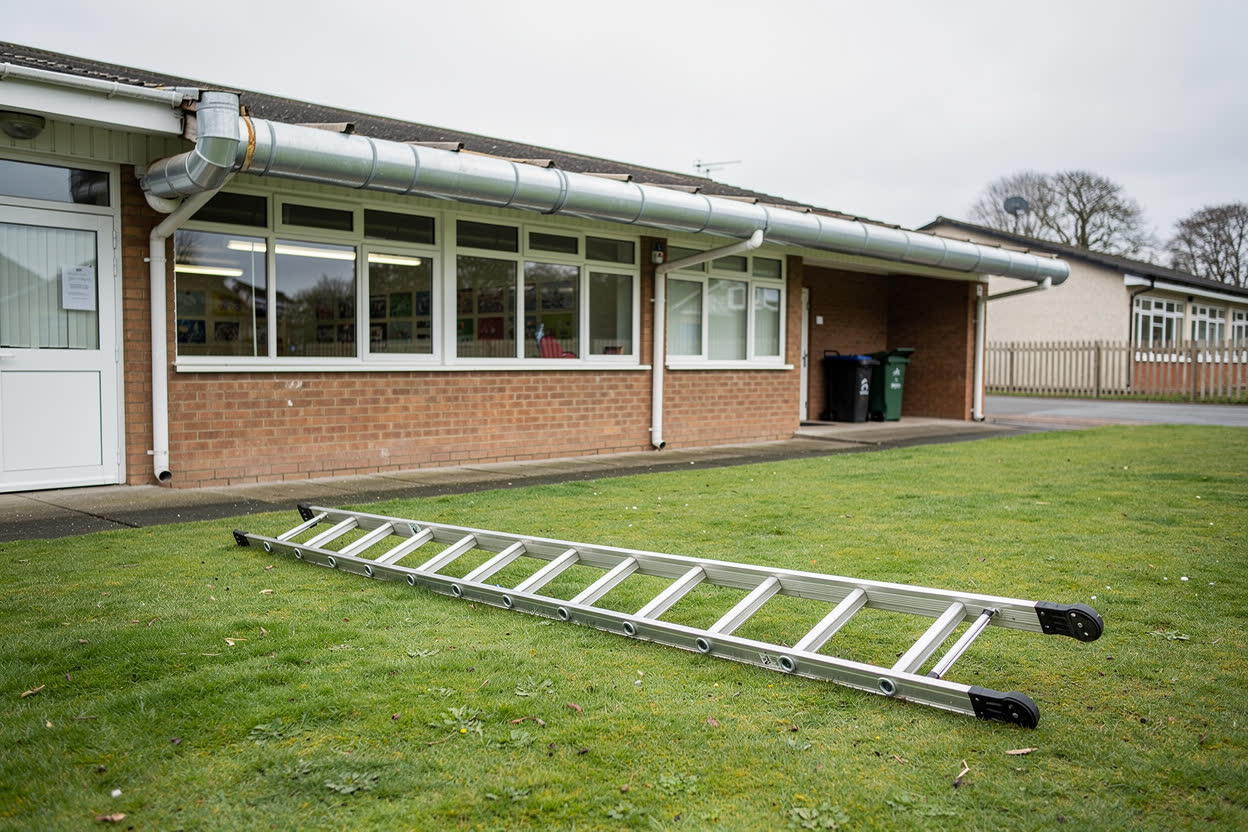
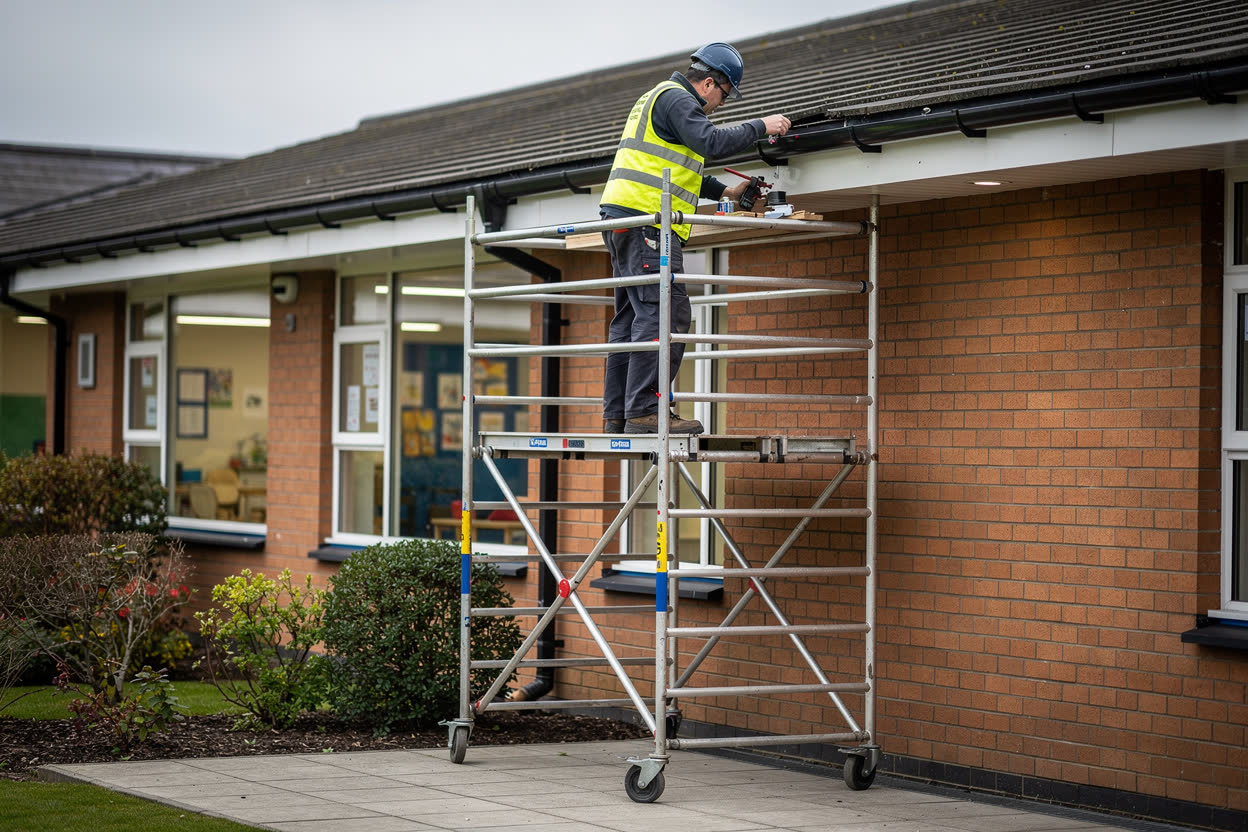
This case is based on a real prosecution. A worker for a roofing firm was replacing guttering and soffit boards at a primary school. He was working from a ladder propped against a wall.

The ladder slipped away beneath him, and he fell about three metres to the ground. He fractured his thigh bone, his pelvis, his elbow and his arm. He spent sixteen days in hospital, and needed surgery to fix a bolt into his hip and a metal plate onto his arm.

Case Study: What Went Wrong

The investigation found that neither the company nor its director had planned the work properly. The job needed both hands, so the worker could not keep three points of contact. A safe working platform, such as scaffolding, was needed.

The company was convicted and fined. The director was prosecuted personally and received a custodial sentence. The business could not survive the penalty and closed.

In Ireland, the same failures fall under the Safety, Health and Welfare at Work Act 2005 and Part 4 of the General Application Regulations 2007, enforced by the HSA. Directors can be prosecuted personally.

Summary

In this module, you have learned that:

Work at height is any work where a person could fall a distance liable to cause injury, and even a short fall can be serious.

Ladders are not banned. They are allowed for low risk, short duration work.

Most ladder injuries come from a few errors, such as overreaching, standing on the top rungs and leaving ladders unsecured.

In the next module, we will look at the law, and the duties of employers and employees.

Knowledge Check
When does the law accept a ladder as a suitable choice for work at height?
Select one answer, then press Check.
Only when an outside specialist has approved it
When a risk assessment shows the work is low risk and short duration
Never, because ladders are banned at work
Whenever the worker feels confident
Correct. Ladders are not banned. They can be used where the work is low risk and short duration.
Not quite. Ladders are allowed, but only for work that is both low risk and short duration. Try again.
Get the full course →Answer the question to unlock the next module.
Page 1 of 14