← Exit
Module 1 · Introduction to Food Hygiene and Safety0% complete · 19 slides left
Food Safety in Catering
Module 1
This course contains audio. Use headphones in public places.
Introduction
Introduction

Every year in Ireland, thousands of people suffer from a foodborne illness — and the overwhelming majority of those cases could have been prevented with good hygiene practice. Behind every statistic is a real person: a customer left in pain, a child in hospital, a business forced to close its doors.

Anyone who prepares, cooks, serves or sells food carries both a legal and a moral duty to make sure that food is safe to eat. That duty does not depend on your job title or how long you have worked in the trade — it applies from your very first shift.

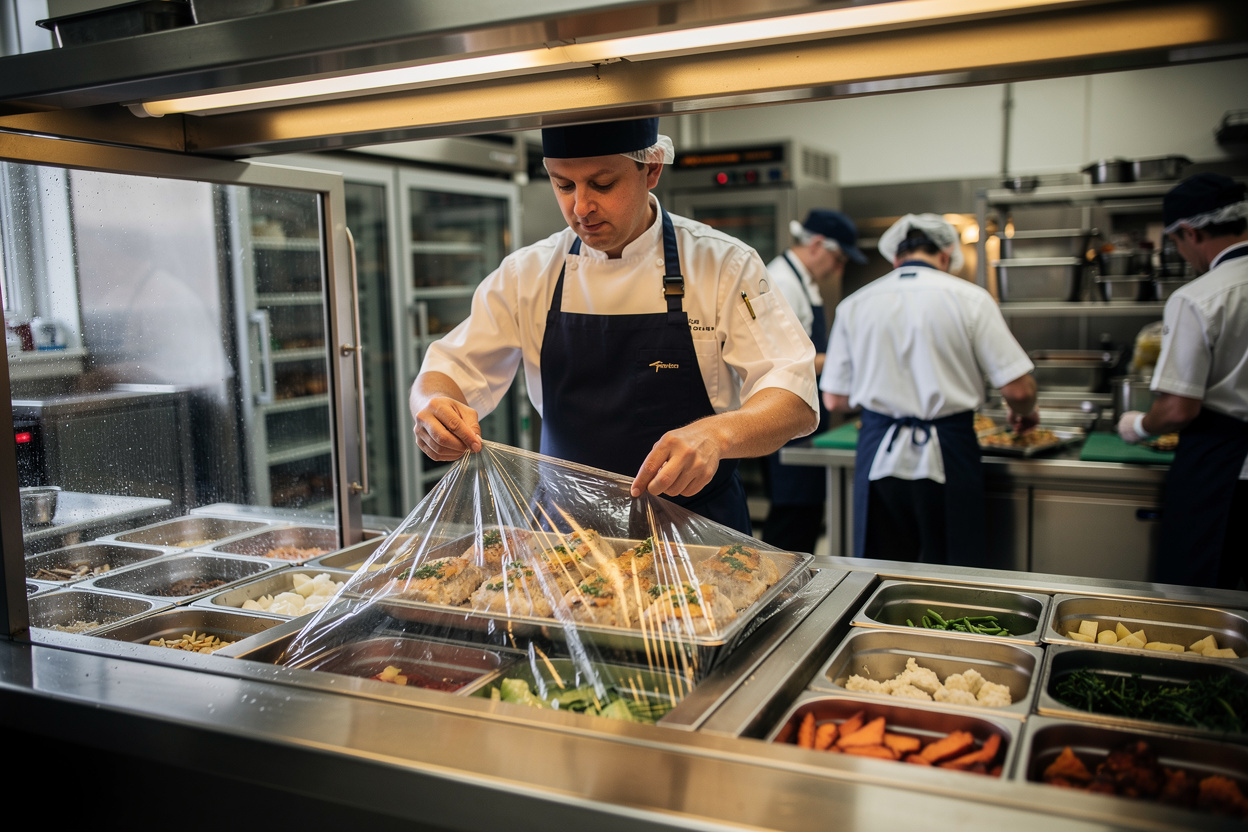
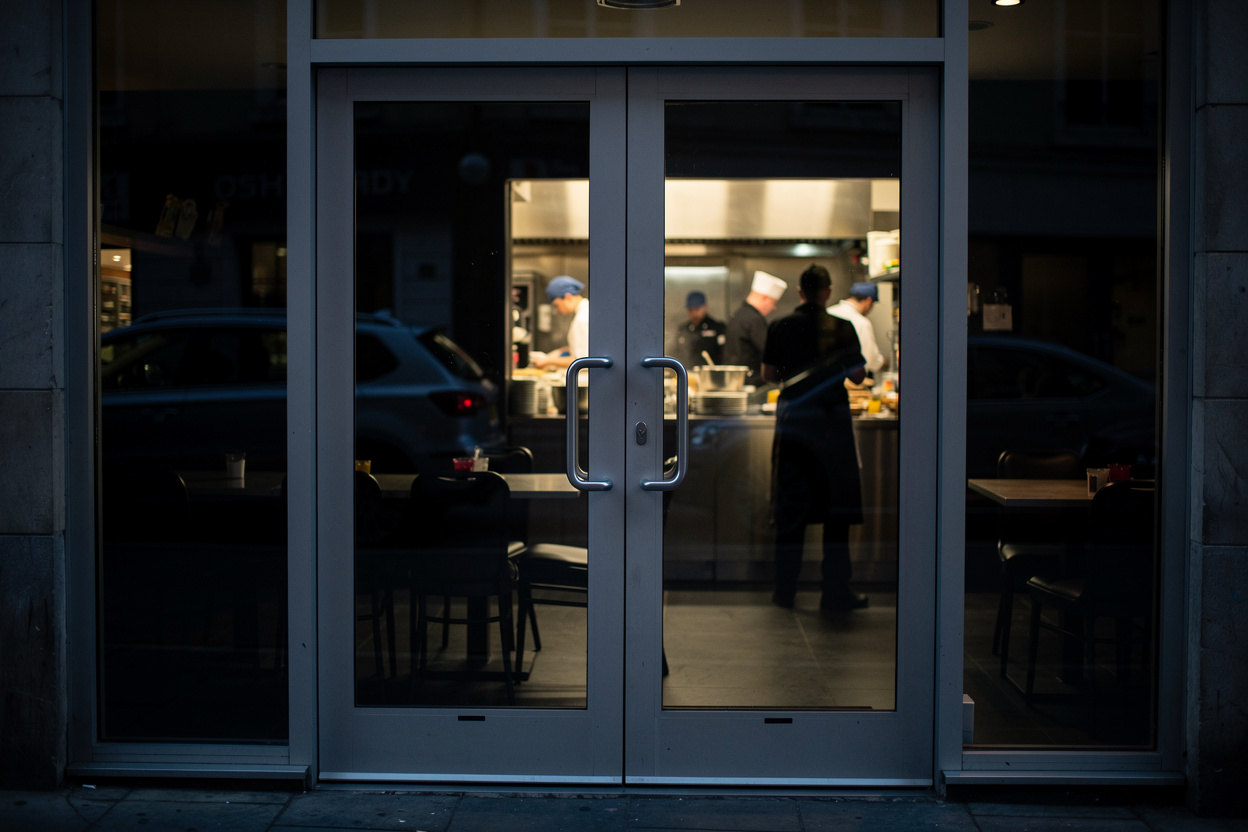
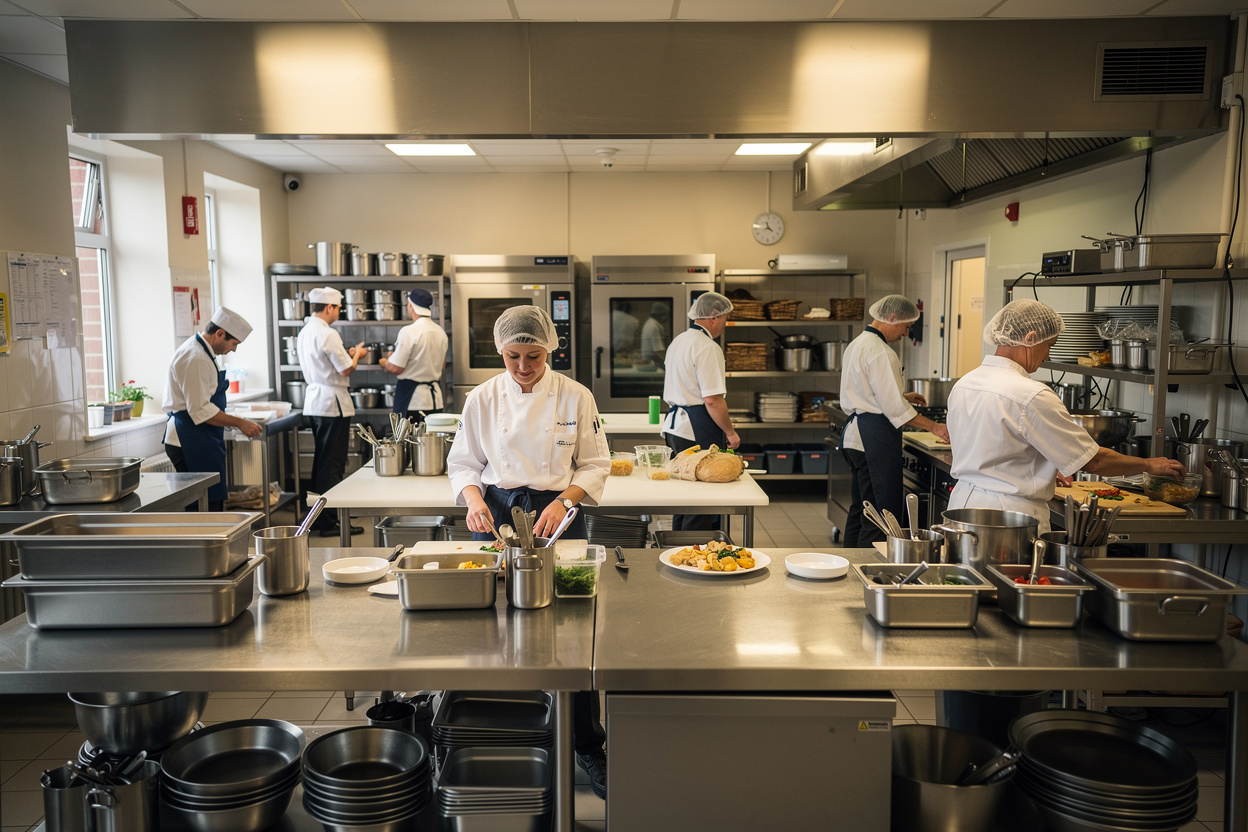
This course is written for everyone who handles food in a catering environment: restaurants, cafés, hotels, pubs, takeaways, mobile units and street food, schools, hospitals, crèches and nursing homes. Wherever food is prepared or served, the same core principles keep people safe.

Through clear explanations, real-world examples and interactive exercises, you will learn to recognise food safety hazards, control contamination, and protect the people you serve — including the most vulnerable.
Course Aims
Course Aims

This course gives a Level 2 food handler the knowledge needed to work safely and stay within the law. By the time you finish, you will be able to:

  • Understand your own responsibilities, and your employer’s, under Irish and EU food hygiene law, and explain the purpose of a food safety management system.
  • Identify the four main types of hazard — microbiological, physical, chemical and allergenic — and understand how contamination and cross contamination happen.
  • Store food safely, explain the difference between ‘use by’ and ‘best before’ dates, and rotate stock correctly using stock rotation methods such as FIFO.
  • Carry out a high standard of personal hygiene and effective hand washing at the right moments.
  • Prepare food safely — thawing, cooking, cooling, hot-holding and reheating — and take accurate core temperatures with a clean, calibrated probe.
  • Recognise the role of cleaning, disinfection and pest control in keeping a kitchen safe.
In This Module
In This Module

Module 1 lays the foundations that the rest of the course builds on. If these basics are clear, everything that follows will make sense. You will cover:

  • The key definitions and terms used throughout food safety training — the shared language of a safe kitchen.
  • The four main hazards that can make food unsafe.
  • Who is responsible for food safety in Ireland — the FSAI, the HSE and its Environmental Health Officers.
  • The role of a food handler, and the supervision, instruction and training the law requires.
  • How safe food is managed day to day in a catering business, using a HACCP-based system.
Food Safety
Food Safety

Food safety means the safe handling, preparation, cooking, storage and serving of food so that it does not contain anything harmful to the people who eat it.

It covers every stage of the journey food takes through your kitchen — from the moment a delivery arrives at the back door, through storage, preparation and cooking, to the plate that reaches your customer. A single weak link anywhere along that chain can put people at risk.

Good food safety is not about one big action; it is the sum of many small, consistent habits carried out correctly every time.

Contamination
Contamination

Contamination is the presence or introduction of a hazard into food. A hazard is anything that could make food unsafe or unfit to eat.

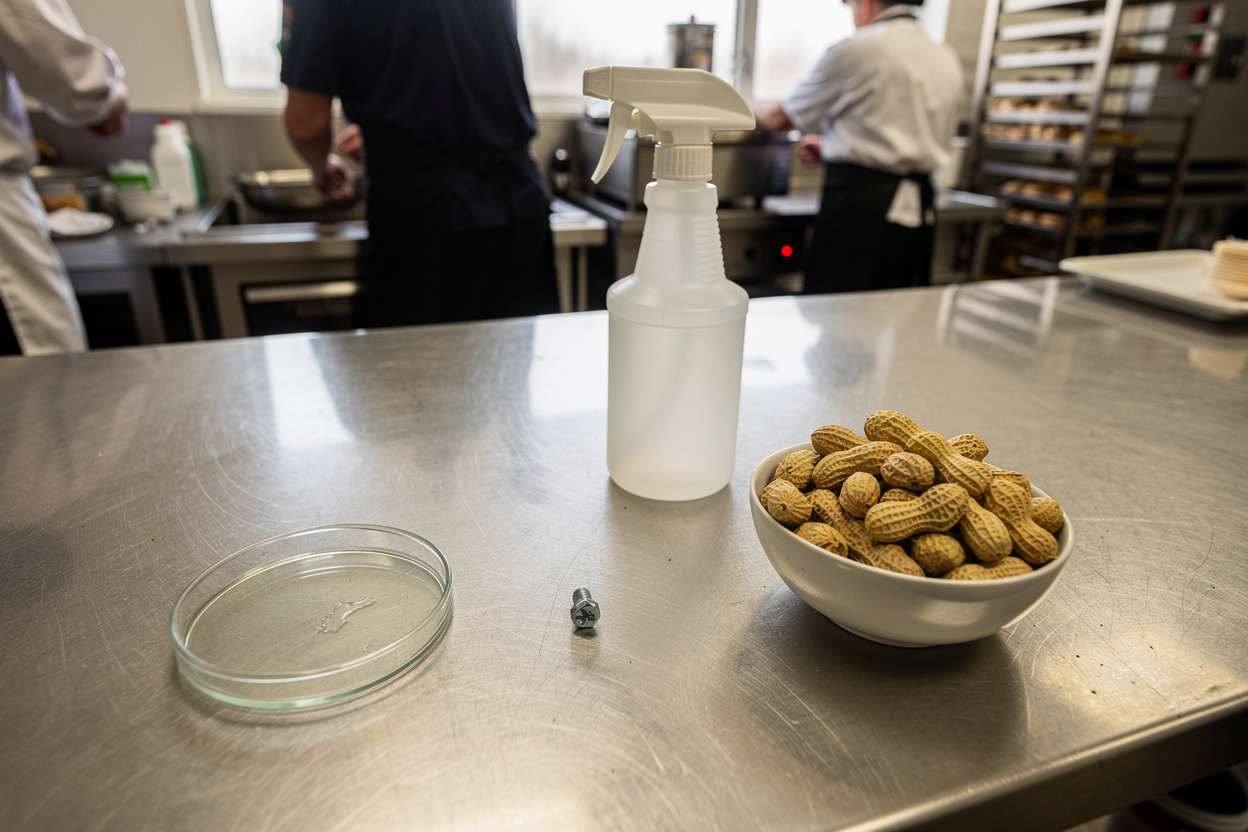
There are four types of contamination hazard: microbiological (bacteria, viruses, moulds and parasites), physical (foreign objects), chemical (harmful substances) and allergenic (foods that cause an allergic reaction). You will meet each of these in detail throughout the course.

Because contamination is often invisible — you usually cannot see, smell or taste harmful bacteria — controlling it depends on good practice rather than on spotting a problem after it happens.

Cross Contamination
Cross Contamination

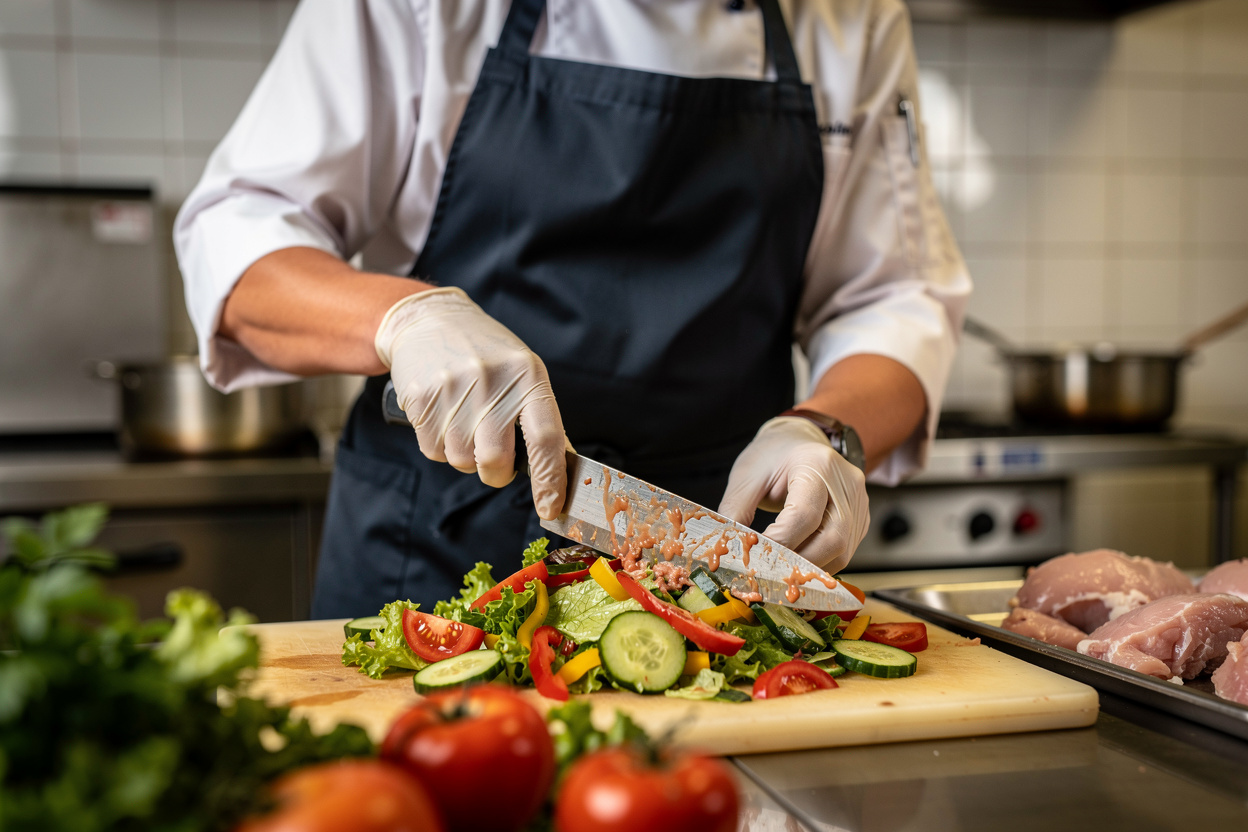
Cross contamination is the transfer of bacteria or allergens from one source to another — for example from raw food, hands, cloths, equipment or work surfaces to ready-to-eat food.

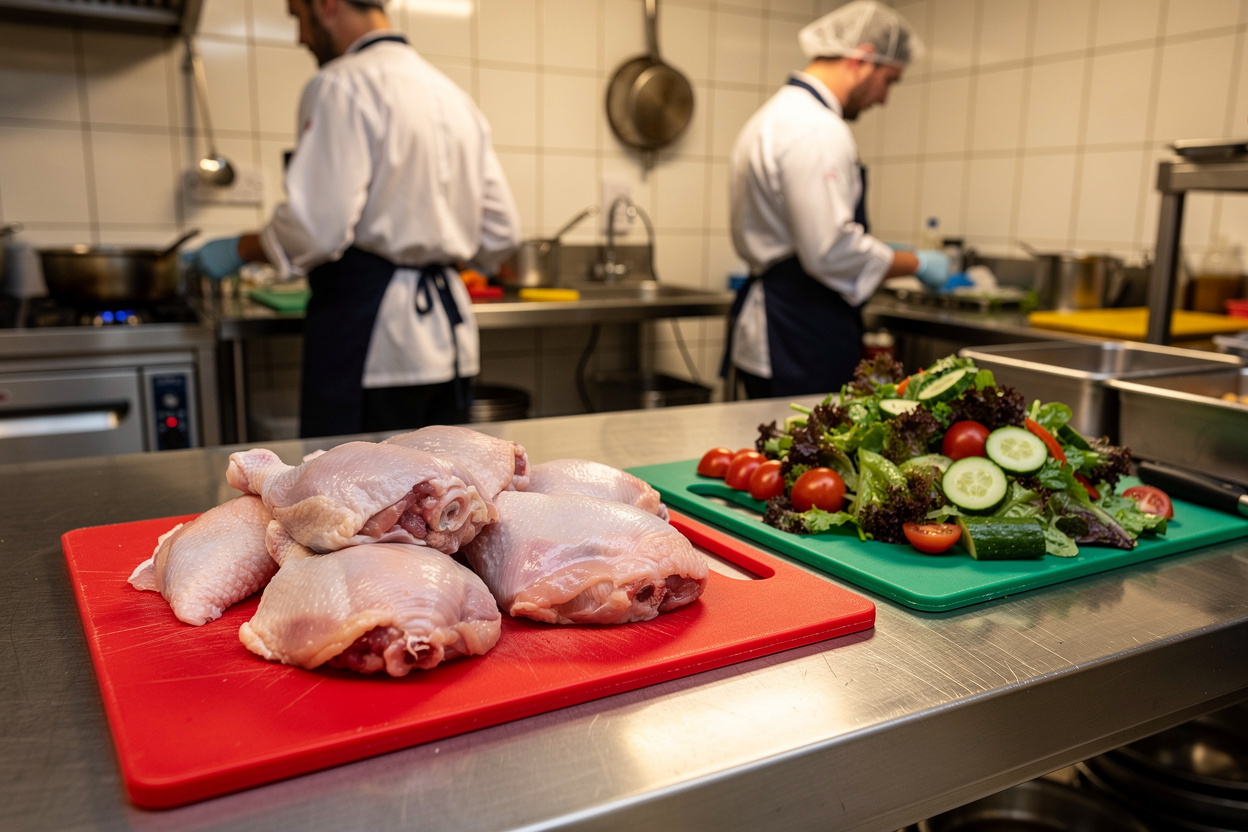
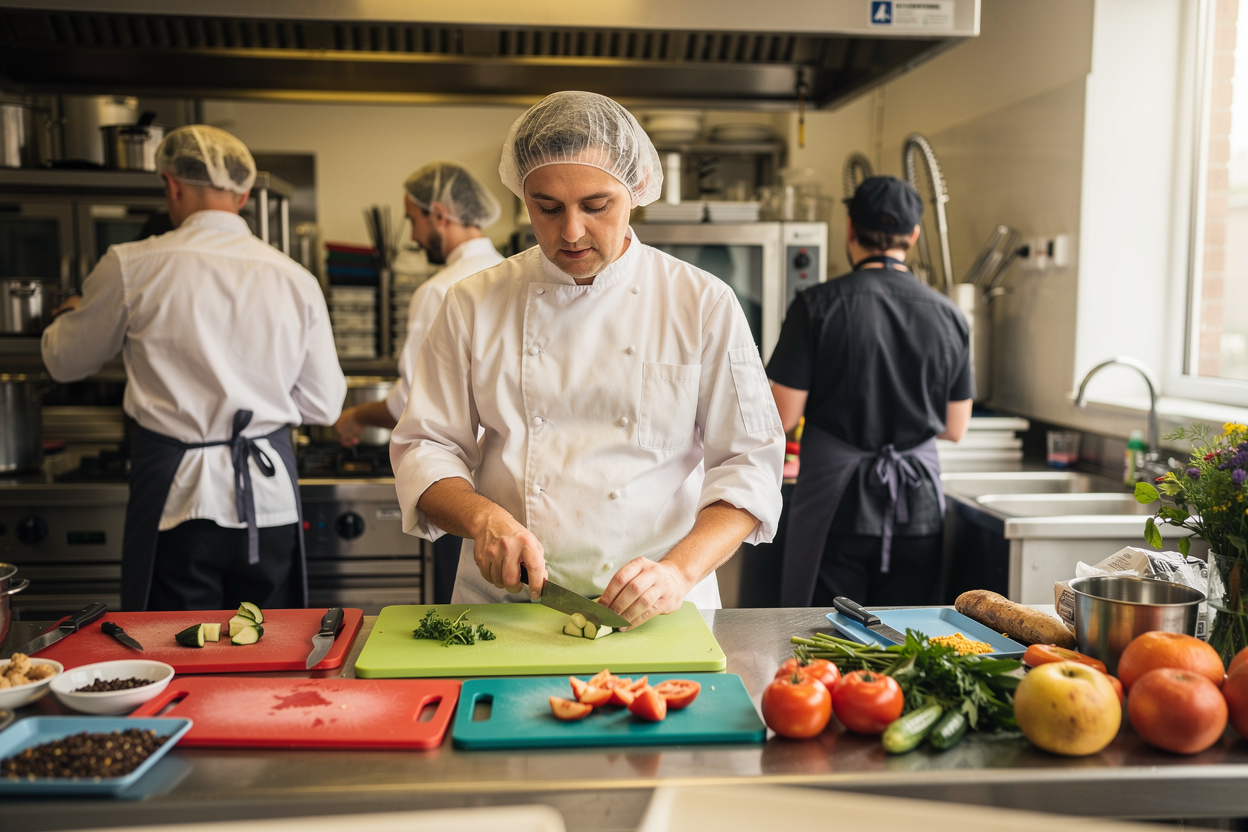
It can happen in three main ways: direct contact (raw meat touching a cooked dish), drip (juices from raw food dripping onto food below it), and indirect contact via a ‘vehicle’ such as a knife, chopping board, cloth or an unwashed hand.

Cross contamination is one of the most common causes of food poisoning, which is why keeping raw and ready-to-eat foods completely apart — in storage, preparation and equipment — is so important.

Food Poisoning & Foodborne Illness

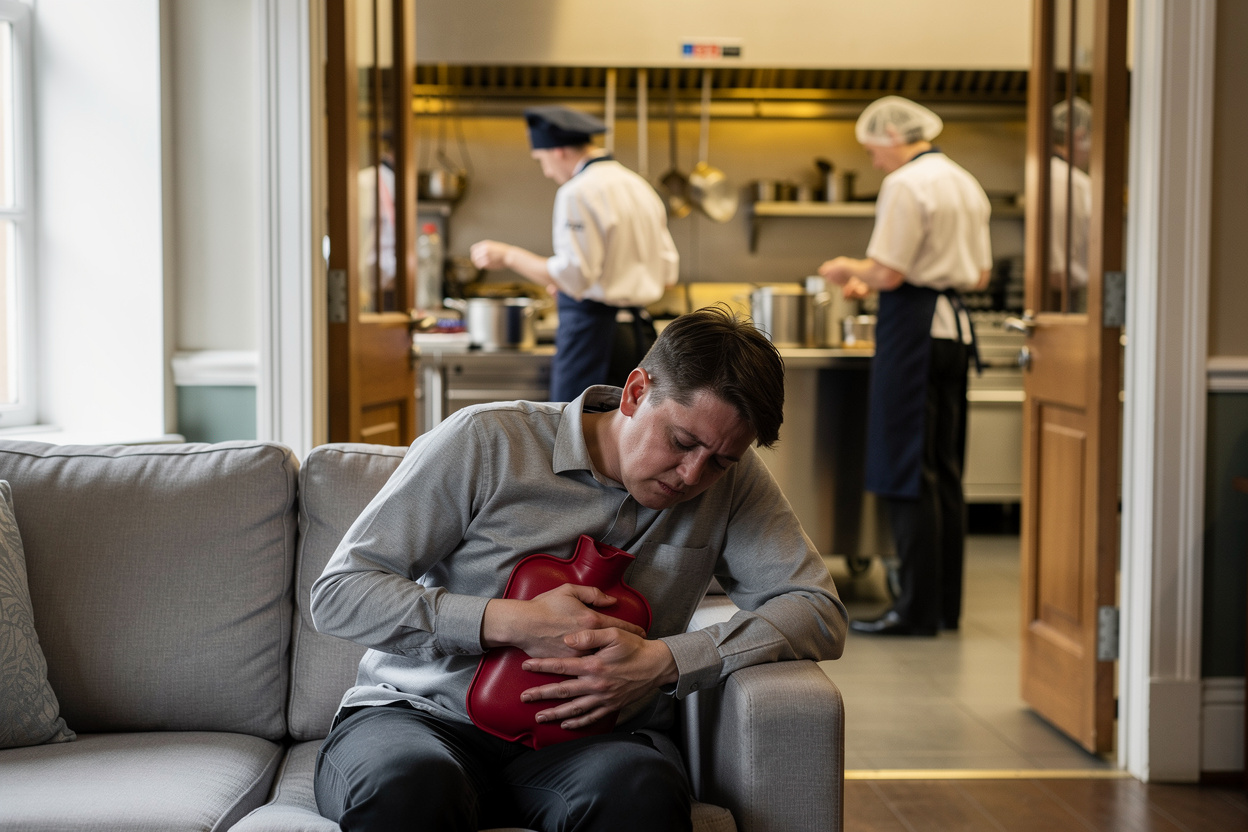
Food poisoning is illness caused by eating food contaminated with harmful bacteria, toxins, moulds, viruses or parasites.

Symptoms such as stomach pain, diarrhoea, nausea, vomiting and fever may appear hours, days or even weeks after eating, which can make the source hard to trace. Most healthy adults recover in a few days, but the illness can be far more serious for people at higher risk.

The groups most at risk — often remembered as the ‘ VYPES ’ — are the V ery ill, the Y oung, P regnant women, the E lderly and anyone with a weakened immune S ystem. For these people, food poisoning can lead to hospital admission or even death.

HACCP
HACCP

HACCP stands for ‘Hazard Analysis and Critical Control Points’. It is an internationally recognised system that helps a food business look at how it handles food, work out what could go wrong, and put controls in place at the points that matter most.

A critical control point is a step where a control is essential to prevent, remove or reduce a hazard to a safe level — for example cooking food thoroughly, chilling it quickly, or keeping it out of the danger zone.

HACCP principles are the foundation of every food safety management system in Ireland, and having a system based on them is a legal requirement for all food businesses.

Food Safety Management System

A food safety management system (FSMS) is a documented system, based on HACCP principles, that sets out all the actions a business takes to keep its food safe.

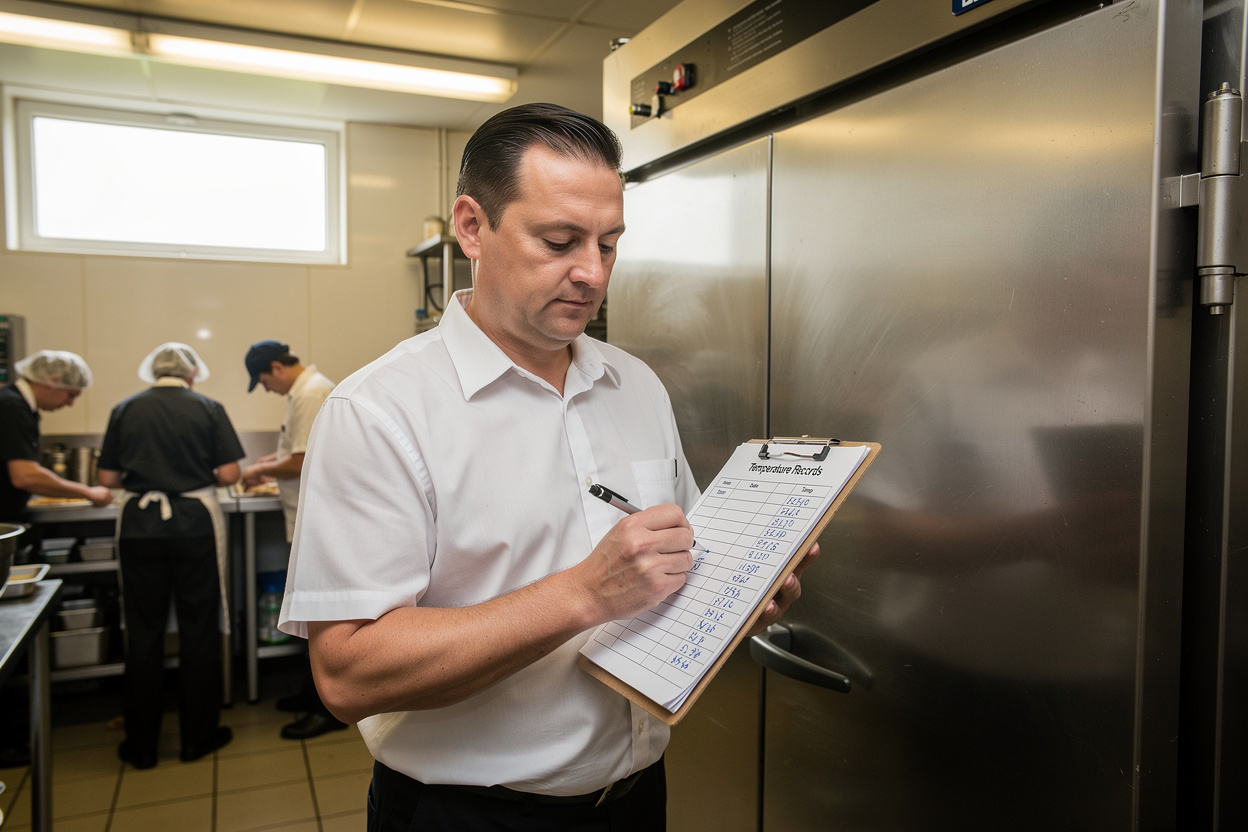
It includes the daily checks, safe methods, cleaning schedules and records that show the business is in control. Keeping it up to date with accurate records is a legal requirement.

Those records are also your best protection: they are a key part of demonstrating due diligence — proving you took all reasonable precautions and did everything you reasonably could to keep food safe — if a problem is ever investigated.

The Four Main Hazards

A food safety hazard is anything that can contaminate food and cause harm. Every hazard you will meet in this course falls into one of these four groups — learning to recognise them is the first step to controlling them:

  • Microbiological: Bacteria, moulds, viruses and parasites — the most common cause of food poisoning, and usually invisible to the eye.
  • Physical: Foreign objects such as glass, metal, hair, jewellery, blue plasters, packaging, or pests and their droppings.
  • Chemical: Harmful substances such as cleaning chemicals, sanitiser residue, pest-control products or natural toxins.
  • Allergenic: Any of the 14 named allergens — such as peanuts, eggs, milk or sesame — which can be life-threatening to an allergic customer.
Who Regulates Food Safety in Ireland

Food safety in Ireland is overseen by the Food Safety Authority of Ireland (FSAI). The FSAI is the national body responsible for making sure that food produced, distributed and sold here meets the highest safety and hygiene standards.

The FSAI carries out much of its enforcement work through service contracts with official agencies. In the catering sector, most inspections are done by Environmental Health Officers (EHOs) employed by the Health Service Executive (HSE). They visit premises, inspect standards, give advice, and have legal powers to act where food safety is at risk.

Before opening, a food business must register with the competent authority for its activity. For most caterers this is the HSE environmental health service; other businesses register with the Department of Agriculture, Food and the Marine or the Sea-Fisheries Protection Authority. Notify the relevant authority of significant changes.

Food Handlers and the Law

Food safety is not optional — it is the law. Regulation (EC) No 852/2004 on the hygiene of foodstuffs applies directly in Ireland and requires every food handler to be supervised, instructed and trained so they can carry out their work safely. The FSAI Act 1998 and Irish food hygiene regulations set out the wider duties and the penalties for getting it wrong.

The Irish standard I.S. 340:2007 ‘Hygiene in the Catering Sector’ gives practical guidance on how to meet these requirements, including food handler training.

As a food handler you are personally responsible for the food you handle. Ignorance of the law is not a defence. You will look at the law and enforcement in much more detail in Module 2.

FSAI Enforcement Orders

Unlike the UK, Ireland does not use a 0–5 hygiene rating scheme. Instead, where standards fall seriously short, the FSAI and the HSE can serve Enforcement Orders on a food business — and these are published for the public to see on the FSAI website each month.

There are three main types: a Closure Order (where there is a grave and immediate danger to public health, closing all or part of the premises), an Improvement Order (issued by the District Court when an Improvement Notice is not acted on), and a Prohibition Order (banning the sale of a particular product).

Businesses that are prosecuted are also listed. A published order is damaging and public — a powerful reason to keep standards high every single day.

Why It Matters
Why It Matters

Poor food handling and inadequate training can have serious and lasting consequences for a business and the people it serves, including:

  • Customers becoming ill, and food poisoning outbreaks that can be traced back to your kitchen.
  • Damaged reputation, poor online reviews and a lasting loss of customers.
  • A Closure, Improvement or Prohibition Order published on the FSAI website for all to see.
  • Forced closure of the business, and the loss of jobs.
  • Fines, prosecution, and in the most serious cases imprisonment.
  • Personal liability — individual food handlers, not just the business, can be prosecuted.
Your Responsibilities

To keep food safe and meet your legal duties as a food handler, you must:

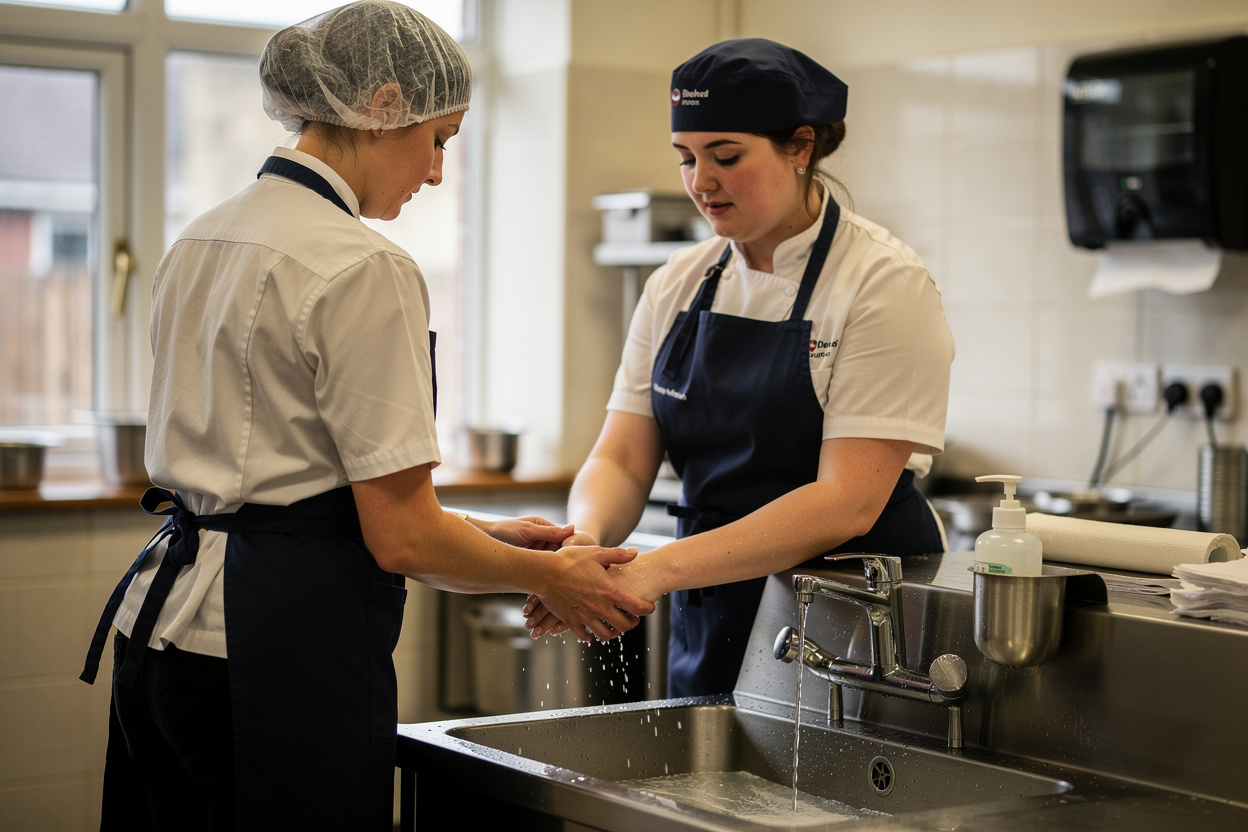
  • Maintain a high standard of personal hygiene and wash your hands thoroughly at the right times.
  • Keep your work area clean, tidy and sanitised, and follow the ‘clean as you go’ principle.
  • Wear clean, washable protective clothing and keep it for work use only.
  • Store, prepare, cook and serve food at safe temperatures, and record checks accurately.
  • Keep raw and ready-to-eat foods apart to prevent cross contamination.
  • Report any illness — such as diarrhoea, vomiting, cuts, boils or skin infections — to your supervisor, and stay away from food if required.
Food Handler Training

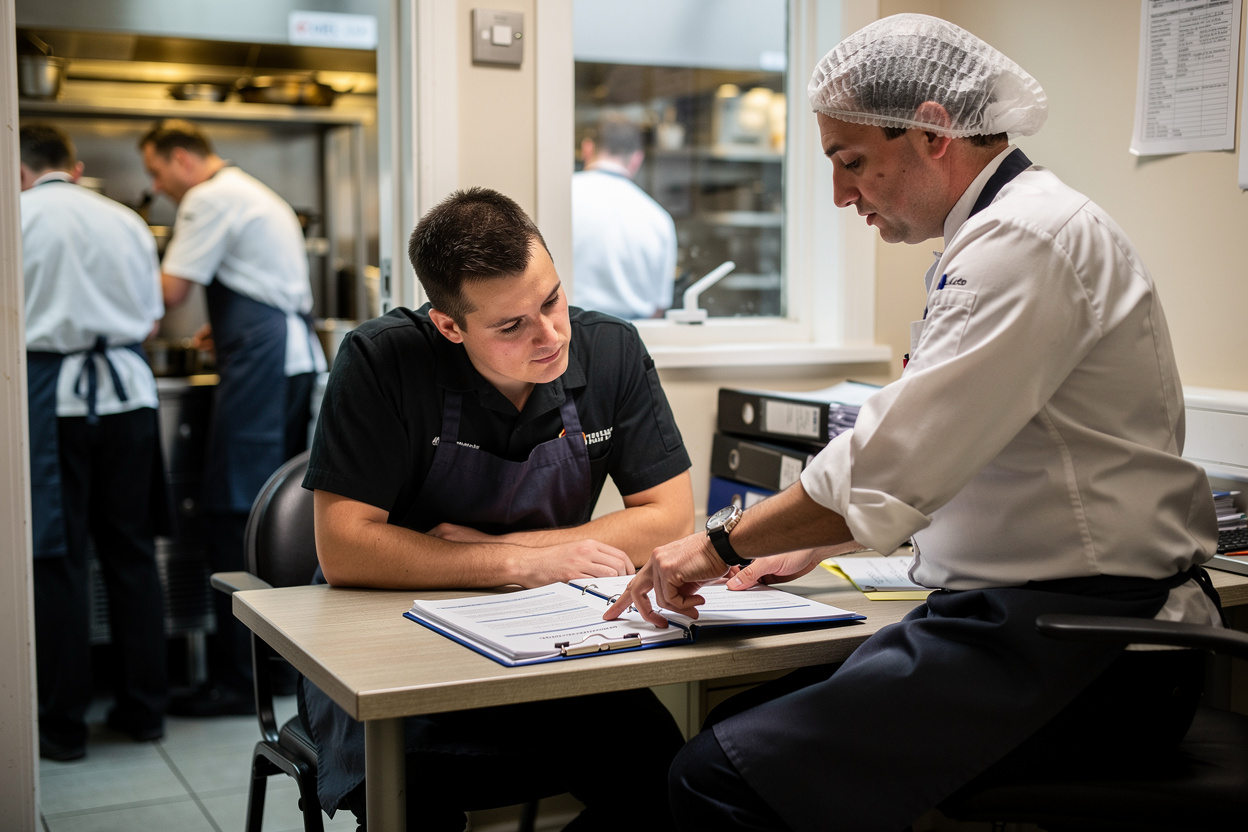
The law requires your employer to make sure you receive the supervision, instruction and training you need to do your job safely. Training must be appropriate to your role — a kitchen porter, a chef and a front-of-house server each need different knowledge — and it must be kept up to date with regular refreshers.

The FSAI’s Guide to Food Safety Training sets out three levels: Level 1 (induction skills), Level 2 (additional skills) and Level 3 (food safety skills for management). This course is mapped to FSAI Level 2.

As a food handler, you are required to take part in the training provided and to put what you learn into practice on every shift. Your employer should keep a record of your training and when your next refresher is due — many refresh food hygiene training every three years, or sooner if your role or the law changes.

Safe Food Management in Practice

Every catering business in Ireland must run a food safety management system based on HACCP principles. For smaller caterers, ready-made guides make this straightforward to follow, providing simple safe methods and a diary for recording daily checks.

The FSAI and safefood provide guidance and templates — including the ‘ Safe Catering ’ pack — to help small businesses build a HACCP-based plan and keep the right records. All are built on the same HACCP foundation set out in I.S. 340.

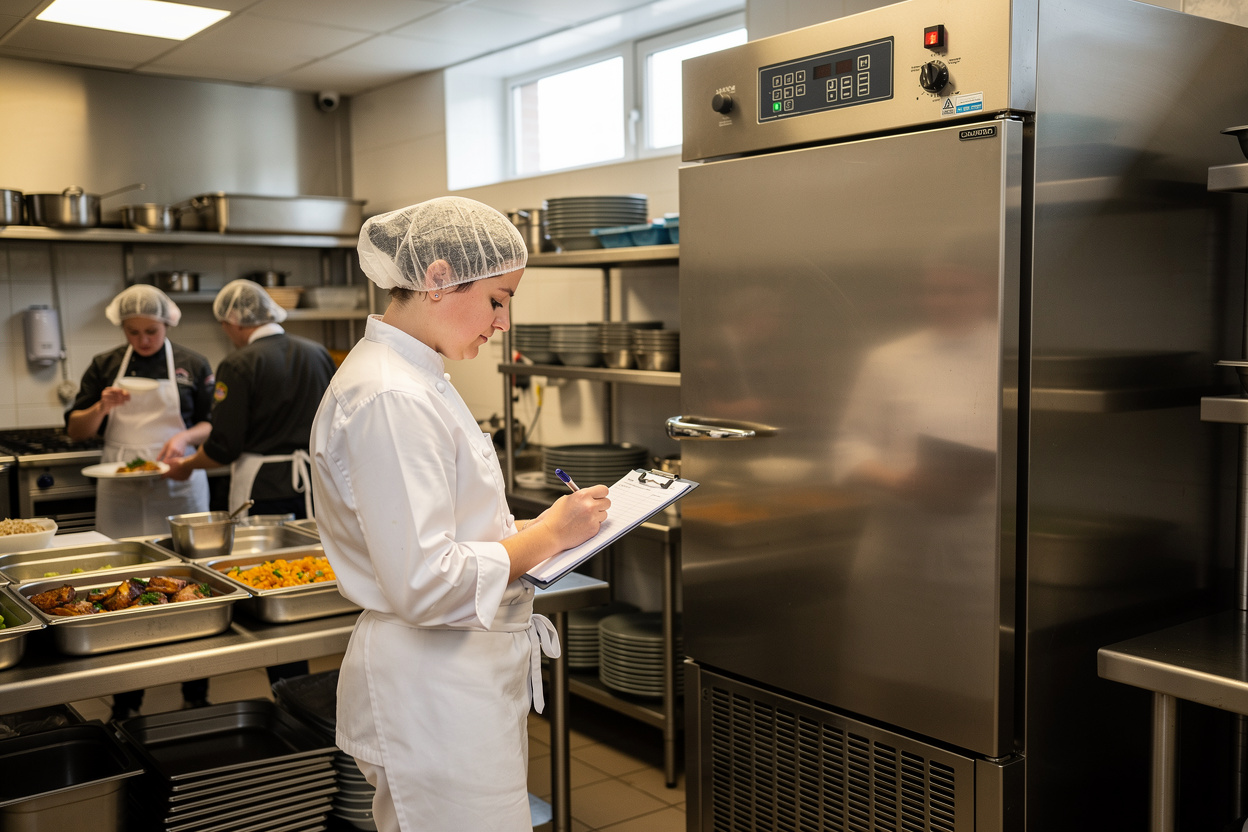
As a food handler, your role is to understand the daily checks that matter most — cooking and reheating temperatures, chilling, cleaning and avoiding cross contamination — to carry them out consistently, and to record them honestly and accurately. Those records are what prove your kitchen is in control.

Summary

In this module, you have learned that:

Key terms — contamination, cross contamination, food poisoning, HACCP and the food safety management system — are the shared language and foundation of safe food handling. Food safety in Ireland is overseen by the FSAI and enforced locally by HSE Environmental Health Officers, and every food business must register with the HSE.

Where standards fail, the FSAI publishes Closure, Improvement and Prohibition Orders online — and prosecutions — for the public to see. Food handlers and employers each have legal responsibilities, and staff must be supervised and instructed or trained in food hygiene to a level appropriate to their work.

Every catering business must run a HACCP-based system, guided by I.S. 340 and packs like Safe Catering, and food handlers keep it working through accurate daily records.

In the next module, we will build on these foundations.

Knowledge Check
Which of the following is an example of cross contamination?
Select one answer, then press Check.
Using the same unwashed knife to cut raw chicken and then a salad
Cooking a chicken breast until it is piping hot throughout
Storing dry goods off the floor on clean shelving
Labelling food with a use by date
Correct — the unwashed knife transfers bacteria from the raw chicken to the ready-to-eat salad. You can now continue.
Get the full course →Answer the question to unlock the next module.
Page 1 of 20